
7 Critical Signs You Need a Kitchen Remodel in 2026: The High-Performance Guide
Updated: Jun 7
What if the room where you spend most of your life is actually a silent liability dragging down your home equity? In 2026, a kitchen is no longer just a place to cook; it is a high-performance engine for your net worth. If your current layout forces a clumsy workflow or your cabinets require constant, expensive maintenance, you are losing more than just time. You are losing money. Recognizing the critical signs you need a kitchen remodel is the first step toward reclaiming your space and your investment.
You already know the frustration of a cramped island or the embarrassment of entertaining in a dated environment. It is exhausting to fight against a floor plan that does not scale with your lifestyle. This guide identifies the specific financial and functional red flags that signal your kitchen has shifted from a home asset to an equity liability. We will analyze how the 2023 National Electrical Code updates and 7.43% HELOC rates impact your renovation strategy. You will learn how to transition from a cluttered, low-efficiency room to a seamless, high-performance aesthetic that maximizes your daily output and your long-term ROI.
Key Takeaways
Identify the "Equity Threshold" to pinpoint exactly when a dated kitchen starts actively devaluing your property appraisal.
Audit your workflow for systemic friction to determine if your layout is a minor inconvenience or a structural bottleneck costing you time.
Recognize the physical signs you need a kitchen remodel by identifying material obsolescence and visual fatigue in your current space.
Stop wasting capital on the "Sunk Cost" trap of superficial refreshes and learn to prioritize long-term asset durability.
Transition from problem to solution using a high-performance design-build framework that guarantees a seamless, modern aesthetic.
Table of Contents
The Economic Indicators: Is Your Kitchen an Equity Liability?
Your kitchen is a financial asset. Treat it like one. Every property eventually hits the Equity Threshold. This is the specific point where the depreciation of your kitchen's layout and materials begins to actively pull down your home’s total appraisal value. If you've ignored the mounting maintenance costs and the dated footprint, you've likely crossed this line. Identifying the signs you need a kitchen remodel is about more than just personal preference; it's about protecting your capital from market obsolescence.
The transition from a "lived-in" space to a "market-obsolete" space happens faster than most homeowners realize. In 2026, the cost of inaction is high. You lose utility every day you struggle with a poor layout, and you lose resale value every year your home falls behind neighborhood standards. This annual erosion of equity is a silent drain on your net worth. When your kitchen requires constant repairs just to remain functional, you are no longer maintaining an asset; you are subsidizing a liability.
Market Competitiveness in the Cincinnati Area
The 2026 Cincinnati real estate market is unapologetically performance-driven. Buyers in Mason and West Chester are no longer looking for "fixer-uppers" at premium price points. They demand high-performance environments. Currently, a 15-year-old kitchen is the #1 hurdle for premium home sales in Hamilton County. It is a deal-killer. Modern buyers expect a seamless evolution of kitchen design that integrates with their digital and social lives. If your aesthetic is stuck in the past, you aren't just losing interest; you are losing the ability to achieve top-tier neighborhood valuations.
The ROI of High-Performance Materials
Strategic capital allocation is the difference between a cost and an investment. Choosing quartz countertops over cheaper, porous alternatives like laminate is a high-performance move. Quartz provides the non-porous durability required for high-traffic family environments, ensuring your investment doesn't degrade before you decide to sell. A professional kitchen remodel Cincinnati system focuses on this long-term equity. High-performance materials like quartzite and custom cabinetry ensure your home remains a competitive asset for decades. Ignoring the signs you need a kitchen remodel means settling for a stagnant asset while your neighbors capitalize on aggressive market growth.
Systemic Layout Friction: When Flow Becomes a Bottleneck
Performance is non-negotiable. If your kitchen layout forces you into a clumsy dance every time you prep a meal, the system has failed. This is one of the most undeniable signs you need a kitchen remodel. Aesthetics are secondary to logic. If your appliance placement adds three minutes to every meal, you’re losing hours of productivity annually. The traditional "Work Triangle" between your sink, stove, and refrigerator must be optimized for speed. When this path is blocked by a poorly placed island or narrow walkways, your kitchen becomes a bottleneck rather than a tool for efficiency.
Modern living has moved past the "Isolated Cook" model. In 2026, the kitchen is a high-performance social hub. Older footprints often wall off the cook, creating a disconnected environment that devalues the home’s social utility. Transitioning to an open-concept design requires a total footprint redesign. You cannot simply remove a wall and hope for the best. Structural flow issues require engineering, not just a fresh coat of paint. Optimizing your footprint requires a strategic design partner who understands the mechanics of flow and asset appreciation.
Identifying Ergonomic Red Flags
Test your kitchen with the "Hip-Check." If two people cannot pass each other in an aisle without a physical collision, your clearances are obsolete. Modern appliance doors and pull-out drawers require specific radius gaps to function without creating a traffic jam. Safety is also a factor. A lack of "landing zones"-the counter space immediately adjacent to your stove or oven-creates a high-risk environment for burns and spills. If you find yourself constantly reaching for essentials or straining to access lower tiers, you are experiencing vertical friction. Your kitchen should adapt to your body, not the other way around.
Storage Deficits and Cabinet Structural Failure
Wasted square footage is a financial leak. "Blind corners" and deep, dark base cabinets are where kitchen productivity goes to die. These areas often become graveyards for expensive cookware because they are inaccessible. Inspect your current custom cabinets for signs of structural fatigue. Drawer-slide failure and box-frame warping are clear indicators that the materials have reached the end of their lifecycle. 2026 lifestyles demand systematic storage. This means integrating heavy-duty pull-outs, specialized hardware, and dedicated zones for high-tech appliances. If your cabinets are fighting you, it’s time to stop repairing and start replacing. Even the 2023 National Electrical Code (NEC) updates for island receptacles suggest that older island designs are no longer up to modern safety standards, making a full footprint overhaul a regulatory necessity.
Material Obsolescence: Aesthetic and Functional Decay
Material failure is a slow leak in your home's performance. It starts with a microscopic scratch and ends with structural decay. If your finishes have reached the point of "Permanent Grime," you are looking at one of the primary signs you need a kitchen remodel. When surfaces degrade, they become physically impossible to sanitize. No amount of chemical cleaning can restore a material that has reached its lifecycle end. This is where your kitchen stops being a workspace and starts becoming a maintenance burden.
The 2026 standard has shifted. We are seeing a massive transition from porous natural stone to high-performance, non-porous engineered surfaces. This isn't just about looks; it's about engineering a zero-maintenance environment. Lighting technology is another silent indicator of obsolescence. Old incandescent or early-gen LED fixtures sabotage your productivity. Modern systems utilize integrated, high-CRI (Color Rendering Index) lighting that mimics natural daylight. If you're still cooking under yellow, flickering shadows, your kitchen is failing its primary functional requirement: visibility.
Sanitary Risks of Aging Surfaces
Bacteria don't care about your memories. They care about cracks. Aged kitchens are often riddled with microscopic bacteria traps that compromise your family's health. Consider these red flags:
Cracked Grout: Porous grout lines in old backsplashes absorb grease and moisture, becoming permanent hosts for pathogens.
The Sponge Effect: Old wood cabinets near sinks absorb steam and splashes until the box frames become breeding grounds for mold.
Pitted Stone: Over time, unsealed granite countertops develop pits and fissures that hold organic matter.
To mitigate these risks, natural surfaces must be aggressively sealed. However, the high-performance move is often a total transition to quartz or quartzite to eliminate the maintenance cycle entirely.
Visual Obsolescence in 2026
Visual fatigue is a psychological drag on your morning routine. If your color palette screams 2010, you're starting every day in a space that feels like a step backward. Texture mismatch is a frequent symptom of a failing system. Installing a new, high-tech smart oven into a kitchen with a 15-year-old tumbled stone backsplash creates a jarring aesthetic friction. A "Clean Slate" design system isn't just about vanity; it's a strategic psychological reset. It aligns your physical environment with your high-performance mindset, ensuring your home reflects your current trajectory rather than your past.
Remodel vs. Refresh: The Logic of Capital Allocation
Stop throwing good money after bad. In the world of high-stakes home equity, cosmetic refreshes are often a financial trap. Painting failing cabinet boxes is the definition of a sunk cost. If the underlying structure is compromised, a new coat of paint is just a mask for inevitable failure. Recognizing the signs you need a kitchen remodel means acknowledging when a space has moved past the point of a simple "face-lift." You must choose between a recurring maintenance expense and a one-time capital investment that secures your home’s market position for the next two decades.
The "One-and-Done" philosophy is about operational efficiency. Systematic remodeling is significantly more cost-effective than incremental, piecemeal repairs. When you gut a space, you solve the plumbing, electrical, and structural issues all at once. Incremental updates often lead to "lip-stick on a pig" scenarios where expensive new countertops are installed over rotting cabinet frames. This creates a massive financial risk. If those frames fail in three years, you lose the countertop investment too. High-performance homeowners prioritize the long-term lifecycle over short-term savings.
Why Cabinet Refacing Often Fails
You cannot fix a warped box with a new door. Refacing is a tactical error when the cabinet frames have reached their lifecycle end. New doors don't solve the friction of sticking drawers or misaligned tracks. Modern hardware systems, such as soft-close glides and heavy-duty pull-outs, require specific drawer box tolerances that older frames simply cannot support. Most importantly, refacing keeps you trapped in an obsolete layout. If your workflow is broken, no amount of paint will fix the bottleneck. You are better off allocating that capital toward a full kitchen remodel that actually improves your daily output.
The Hidden Costs of Constant Repairs
The "Handyman Tax" is a silent drain on your monthly cash flow. Aging plumbing and failing drawer slides require constant attention. These small costs add up. Furthermore, energy inefficiency is a major factor in 2026. Appliances from 15 years ago are massive energy drains compared to modern, AI-integrated induction systems. There is also a "Stress Tax" to consider. A kitchen that fights you every morning creates a psychological drag. When you add up the repair bills, the inflated utility costs, and the mental toll, the signs you need a kitchen remodel become a clear mandate for change. Investing in a high-performance environment eliminates these leaks and replaces them with a streamlined, high-yield asset.
Engineering Your Outcome: The Design-Build Execution
Identifying the signs you need a kitchen remodel is the diagnostic phase. Execution is where you capture the value. A systematic design-build framework eliminates the gap between creative vision and technical reality. It's about precision. It's about speed. Moving from a list of functional failures to a high-performance solution requires a team that controls the entire value chain. Fragmented projects fail because communication breaks down between the designer and the installer. Integrated projects dominate because the blueprint and the build are one single motion.
The Design-Build Advantage in Cincinnati
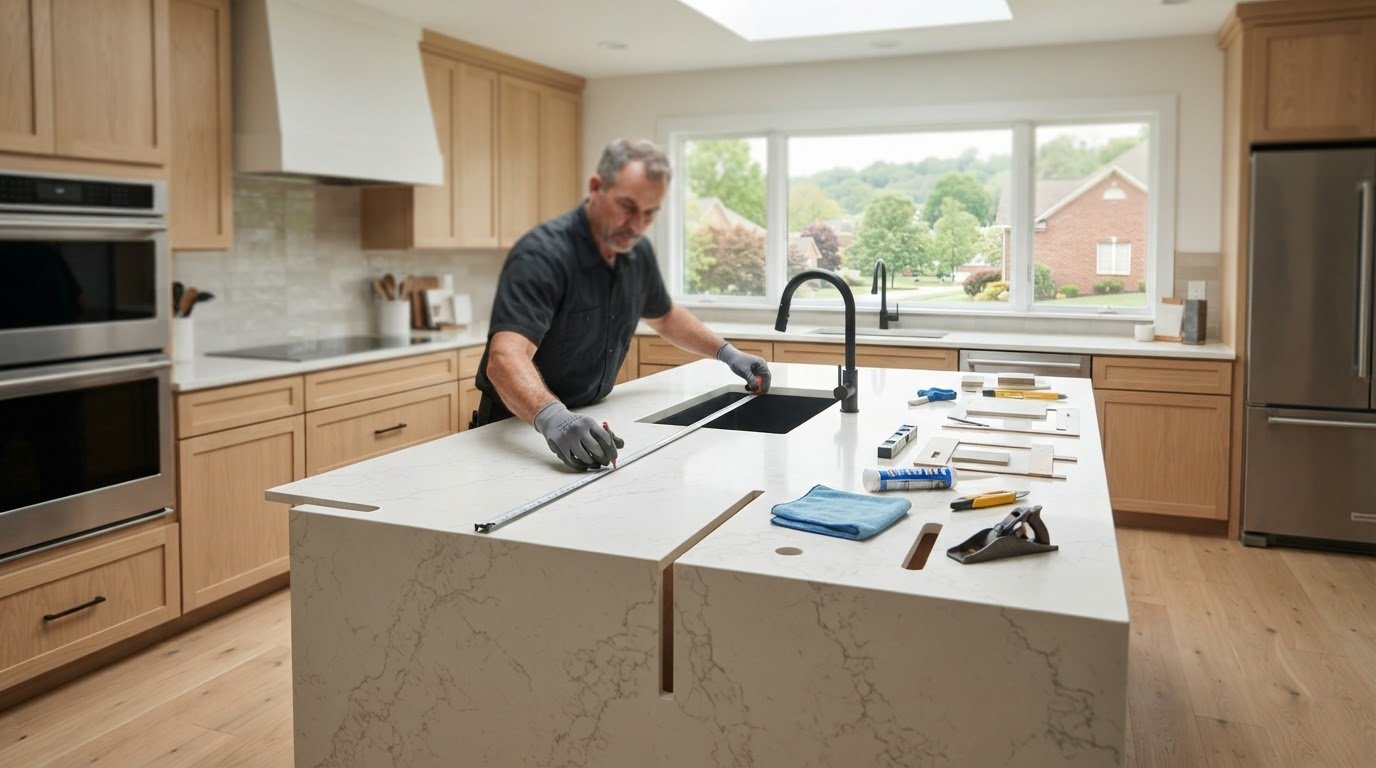
Traditional remodeling is fragmented. You have a designer here and a contractor there. This creates friction. Friction is a cost. In-house craftsmen ensure that every cabinet installation and countertop cut meets exact specifications. This level of local accountability is why home renovation contractors using a unified system consistently outperform fragmented models. Your initial site assessment isn't just a walkthrough. It's a technical audit of your home’s potential. We analyze the existing infrastructure to ensure your new layout isn't just beautiful but structurally sound and compliant with the 2024 International Residential Code (IRC). This includes auditing your electrical capacity for modern appliances and ensuring your island design meets the latest 2023 NEC requirements for integrated receptacles.
Selecting High-Performance Assets
Strategic capital allocation determines your final ROI. Since cabinets typically account for 30-50% of a remodel budget, your selection must be data-backed. We recommend a Showroom Stress-Test. You need to see how your quartzite, marble, or soapstone countertops react to real-world lighting environments. You need to feel the mechanical feedback of the cabinet hardware. To see how these high-performance components come together in a professional build, you can check out Instacabinets for inspiration on custom cabinetry and integrated design. This isn't casual shopping. It's stress-testing your material selections against 2026 performance standards. Finalizing your plan means moving from red flags to a blueprint for market dominance.
With current cabinet tariffs holding at 25% and HELOC rates averaging 7.43% as of June 2026, there's no room for guesswork. You need a kitchen engineered for both equity and lifestyle. This means selecting materials like quartz for durability or wood for specific aesthetic accents, all while maintaining a seamless workflow. You’ve identified the signs you need a kitchen remodel; now, you must execute the solution. The final outcome is a high-performance environment that works for you, rather than you working for it. Stop reacting to decay. Start engineering your outcome.
Secure Your Equity with Precision Execution
Your kitchen is either an engine for equity or a drain on your capital. We've analyzed how systemic layout friction and material obsolescence actively devalue your property in the current market. In 2026, settling for a cosmetic refresh is a tactical error that ignores the long-term ROI of high-performance materials. Recognizing the signs you need a kitchen remodel is the critical first step toward strategic asset reallocation and lifestyle optimization.
Success requires a partner who understands the mechanics of technical execution. Since 2004, our family-owned team has delivered results-driven renovations across Cincinnati. With our in-house team of master craftsmen and a dedicated premium stone fabrication facility, we eliminate the friction of fragmented contracting. We don't just build kitchens; we engineer outcomes. Stop guessing and start engineering-schedule your high-performance design consultation today. Your home deserves a system that performs at the same level you do.
Frequently Asked Questions
How often should a kitchen be remodeled for maximum home equity?
A full remodel is recommended every 10 to 15 years to maintain peak market competitiveness and home equity. Identifying the signs you need a kitchen remodel early allows you to maintain your property as a top-tier asset. Beyond this window, your home’s appraisal value begins to suffer from material wear and layout obsolescence. Waiting too long turns a functional workspace into a financial liability that is difficult to recover in a quick sale.
Can I remodel my kitchen in stages to save money?
Remodeling in stages is possible but often increases your total capital outlay. You'll likely face repeated mobilization fees and the high risk of damaging new installations during later phases of construction. A unified, systematic approach is the high-performance choice. It ensures structural and aesthetic cohesion across the entire space while eliminating the "Handyman Tax" and logistical stress associated with a perpetual, multi-year construction zone.
What is the most expensive part of a kitchen remodel in Cincinnati?
Custom cabinetry typically represents the largest capital allocation in a Cincinnati remodel, often accounting for 30% to 50% of the total budget. While local options vary, studying the craftsmanship of industry leaders like NY Cabinets can help you identify the superior construction needed for a lasting investment. These units provide the structural foundation for your kitchen’s performance and storage capacity. High-quality countertops and professional labor follow as the next significant investments. It is essential to prioritize these high-impact assets during the planning phase to ensure long-term durability and equity growth.
Is it worth remodeling my kitchen if I plan to move in two years?
It's definitely worth it if you focus on high-ROI updates that address the obvious signs you need a kitchen remodel. Minor to mid-range projects often recoup a significant percentage of their cost in immediate resale value. In competitive markets like Cincinnati, a modern kitchen is the primary lever for a fast sale. Buyers prioritize move-in-ready spaces with high-performance aesthetics over homes requiring immediate, expensive renovations.
How do I know if my kitchen layout is actually 'bad' or just small?
A small kitchen is a square footage constraint, while a bad layout is a functional failure. If your workflow is constantly interrupted by appliance doors or narrow aisles, you have a structural friction issue. Perform the "Hip-Check" test. If the space prevents two people from working simultaneously without a collision, it's a failure of engineering. A professional redesign can often fix these bottlenecks without needing a massive addition.
What are the most durable countertop materials for a 2026 kitchen?
Quartz and quartzite are the most durable countertop options for the 2026 market. Quartz is an engineered, non-porous surface that requires zero maintenance or sealing, making it ideal for high-traffic family environments. Quartzite offers the aesthetic of natural stone with significantly higher hardness than marble. Both materials effectively eliminate the maintenance cycle and sanitary risks associated with older, porous surfaces that have reached their lifecycle end.
Should I replace my appliances before or during a kitchen remodel?
Finalize your appliance selections during the design phase, well before construction begins. Modern cabinetry is engineered to the exact dimensions of your units to ensure a seamless fit. While we don't sell appliances, our design-build team requires your specific model numbers to create a precise blueprint. This proactive approach prevents the structural friction and costly delays caused by trying to fit new technology into old footprints.
How long does a typical full kitchen remodel take from start to finish?
A typical full kitchen remodel takes between 8 to 12 weeks once the construction phase begins. This timeline accounts for demolition, structural changes, and the precision installation of cabinets and countertops. Total duration depends on material lead times and the complexity of your custom design. Early planning is the most effective tool to minimize downtime and ensure the project moves from blueprint to completion without unnecessary friction.

Comments