
Compare Quartz, Stone and Laminate for Bathroom Durability
The toughest-looking surface isn’t automatically the most durable bathroom countertop. For the best bathroom countertops for durability, engineered quartz is a strong all-around choice: its non-porous surface resists stains and doesn’t require periodic sealing. Granite also handles heat and everyday wear well, but natural stone can chip or crack under pressure.
That trade-off matters in a bathroom, where moisture, cosmetics, cleaners, and daily use all put a countertop to work. Laminate is easy to maintain, but chips, peeling, warping, and burn damage can be harder to repair.
This comparison explains how quartz, granite, marble, soapstone, laminate, and other countertop options hold up. See where each material resists damage, where it needs more care, and which weaknesses matter most in a bathroom. That makes it easier to choose based on the wear you want to avoid, not just the surface’s first impression.
Table of Contents
Quartz durability and maintenance
Engineered quartz balances stain resistance with straightforward care, while natural stones have different durability and upkeep requirements. Compare each surface’s properties and maintenance routine with your bathroom’s needs before choosing.
Engineered Quartz Durability
Manufactured quartz combines more than 90 percent loose quartz crystals with resins and pigments. Its non-porous surface resists stains, scratches, and chips, and doesn’t require periodic sealing. The material has a Mohs hardness ranking of 7, making it a durable option for daily vanity use.
Quartzite is natural stone with a hardness of 7-8 on the Mohs scale, while granite ranks 6-7. Quartz typically costs slightly more than granite, so compare maintenance and appearance alongside upfront project costs. A variety of colors can support different bathroom designs and home value goals.
For accessible vanities, the U.S. Department of Justice states a maximum vanity height of 34 inches and at least 29 inches of knee clearance.
Damage from Bathroom Products
Yes. Cosmetics, hair dye, and cleaners can stain or etch porous marble, while hard water can leave mineral deposits on countertop surfaces. Quartz’s non-porous surface resists stains, but prompt cleanup still helps limit residue from bathroom products.
Use a soft cloth and mild cleaner for routine quartz care, and avoid abrasive cleansers that can dull the finish. For example, wipe up spilled hair dye rather than letting it sit on the vanity. Marble needs more protection because it is porous and vulnerable to staining from cosmetics and cleaners.
Choose quartz for low-maintenance stain resistance, quartzite for a hard natural stone, or granite when its appearance and care needs suit your bathroom.
What's The Most Durable Countertop?
Granite is a strong contender for bathroom durability because it resists scratches, heat, and general wear. Choosing among the best bathroom countertops for durability means weighing those strengths against maintenance, appearance, and how the vanity is used.
Granite Durability and Sealing
Granite is natural stone with a Mohs hardness of 6-7. It handles heat from tools such as hair dryers and curling tongs, but concentrated pressure can still chip or crack it. Bathroom granite tops are usually sealed every 1-3 years to help protect the surface.
Quartz doesn’t require periodic sealing, while marble needs regular sealing. Granite’s care routine is a practical factor when comparing the best bathroom countertops for durability, especially if you prefer a natural surface with manageable upkeep.
Granite Durability and Appearance
Granite’s natural colors and patterns vary from slab to slab. That visual character is separate from performance: a dramatic pattern doesn’t indicate greater resistance to scratches or heat. Compare the material’s care needs with the appearance you want instead of judging durability by color alone.
Engineered stone tends to have a more consistent look, while granite offers natural variation. If the vanity is a focal point, consider how its pattern works with the room’s finishes and whether regular sealing suits your maintenance preferences.
Durable Countertop Edges and Thickness
An edge profile affects the countertop’s exposed corners and overall look, but it can’t prevent every impact chip. A rounded profile removes a sharp corner; a straight profile gives the vanity a crisp outline. Choose an edge that fits the bathroom’s design and expected use.
Thickness alone doesn’t determine how durable a countertop will be. Material quality, support, and installation also affect performance. For a bathroom used daily, treat thickness as a design choice, not a substitute for suitable support and careful installation.
Compare granite’s natural variation and care routine with other stone options before settling on a surface. Explore stone countertop options as you shape a bathroom plan around the appearance and upkeep you prefer.
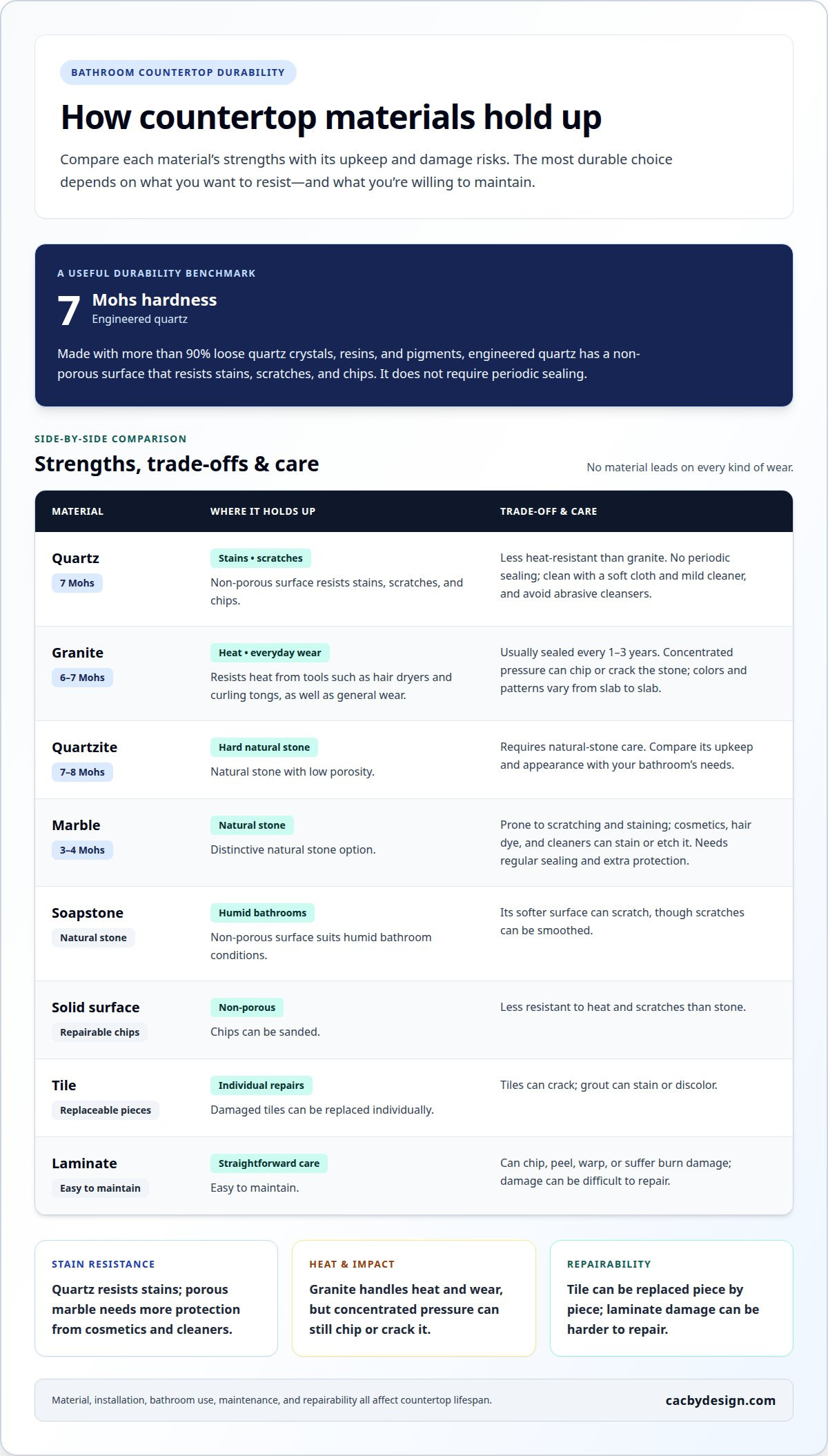
Countertop materials compared by pros and cons
Bathroom countertop materials involve trade-offs in resistance, maintenance, and repairability. Quartz, granite, soapstone, marble, solid surface, and tile each handle stains, heat, moisture, and impact differently.
Quartz and granite are strong choices for resisting scratches and heat. Quartz also resists stains, while granite needs periodic sealing. Soapstone is non-porous and suits humid bathrooms, though its soft surface can scratch. Marble is more vulnerable to scratches, etching, and stains from cosmetics or cleaners. No single material leads on every criterion.
A countertop’s lifespan depends on its material, installation, bathroom use, maintenance, and whether damage can be repaired. A chipped tile can be replaced, while laminate damage can be difficult to repair. This makes repairability as important as initial resistance.
Tile needs special attention in wet areas: cement board, also called backer board, is recommended as its substrate. Glazed ceramic or porcelain tile doesn’t need sealing, but grout lines can be difficult to clean. For a kitchen or bathroom, consider the practical priority: repair options, easy cleaning, or resistance to daily wear.
Solid-surface chips can be sanded out, and scratches on acrylic surfaces can be buffed. By contrast, laminate can chip, peel, or warp in humid bathrooms, and damage is difficult to repair. For countertop installation, the project scope, material, slab selection, and cutouts all affect pricing, which is provided after a quote request.
Laminate affordability and damage risks
Laminate may suit homeowners who prioritize an affordable surface and easy routine care. Its main weakness is damage: chips, peeling, burns, and moisture-related warping can be difficult to repair.
Laminate in Humid Bathrooms
Laminate is easy to maintain, but bathroom humidity creates a specific risk. Over time, moisture can contribute to peeling or warping, particularly where the surface is damaged. Unlike non-porous solid surface, laminate damage can be difficult to repair, so protecting the countertop from standing water matters.
Wipe up spills promptly and keep the surface clean. For example, don’t leave water pooled around a sink edge or chipped area. This can limit prolonged moisture exposure, but it won’t make laminate immune to humidity or restore a damaged surface.
Laminate Durability and Cost
Laminate’s affordability can appeal when budget leads the decision. It also comes in a variety of colors and patterns, giving homeowners options for coordinating a vanity with bathroom finishes. Those benefits involve a durability trade-off: heavy use can chip or peel the surface, and burns can leave lasting damage.
Compare laminate with solid surface before choosing. Solid-surface scratches can be buffed, and chips can be sanded out. Laminate damage, by contrast, can be impossible to repair, so a lower-cost choice may mean replacing the countertop sooner if it gets damaged.
Let the likely wear pattern guide your decision. A lightly used powder room may place less demand on a countertop than a shared bathroom used for daily grooming. In either space, keep hot tools off the surface and avoid cutting or scraping on laminate. These steps reduce avoidable damage but can’t remove the material’s underlying limits.
Choose laminate if upfront affordability and color flexibility outweigh repairability. Choose solid surface if repair options matter more. For a bathroom plan that balances cabinets and countertop choices, plan your bathroom remodel around the room’s use and finish preferences.
Countertops and Cabinetry By Design
Countertops and Cabinetry By Design helps turn durability priorities into a coordinated bathroom countertop plan. Its team handles design, material selection, fabrication, and professional installation, so you can consider the surface alongside the vanity and the room’s daily use.
Compare quartz, granite, quartzite, and marble based on upkeep, resistance to wear, and the look you want. The right choice depends on which trade-offs suit your bathroom, not on one material being best for every home. If you’re planning a broader update, bathroom cabinetry can also be part of the design.
When you’re ready to plan a bathroom countertop project, contact Countertops and Cabinetry By Design.
Make the Next Design Decision Count
A bathroom countertop works best when it suits the room’s daily routine, cabinetry, and finishes. Use those priorities to narrow your shortlist, then consider how each material supports the overall design instead of treating the surface as a standalone choice. That’s a practical way to turn your research into a cohesive bathroom plan.
Countertops and Cabinetry By Design offers marble, quartzite, and quartz countertops, giving you distinct material options as you shape your plan. The best bathroom countertops for durability aren’t simply the toughest option on paper. They’re the ones whose maintenance, appearance, and performance suit your project.
Bring your bathroom goals and material preferences into the conversation. Contact Countertops and Cabinetry By Design to discuss your countertop project and move toward a design that feels right for your home.
Frequently Asked Questions
Which bathroom countertop materials are most durable?
Quartz, quartzite, and granite are leading options when resisting daily wear matters. The best fit depends on your priorities: frequent spills, hot styling tools, or a preference for natural stone. For example, a busy shared vanity may benefit from an easy-care surface, while someone who values natural variation may accept more maintenance. Consider repairability and cleaning habits alongside surface strength.
How do quartz, granite, porcelain, marble, and solid surface compare for bathroom countertops?
Quartz offers a low-maintenance surface, while granite and marble are natural stones with different care needs. Glazed porcelain tile doesn’t need sealing, but tile can crack and grout may discolor. Solid surface is non-porous, and some scratches or chips can be repaired. Compare the trade-offs that matter most: staining, heat, visible seams, maintenance, or repair after damage.
What is the average installed cost per square foot for durable bathroom countertops in the US?
Installed pricing depends on the material, countertop dimensions, slab selection, edge details, sink cutouts, and project scope. Pricing is provided after a quote request rather than as a universal per-square-foot average. A small vanity with straightforward details differs from a larger custom layout. For a useful comparison, review estimates with the same material, measurements, fabrication details, and installation scope.
Are there special durability considerations for bathroom countertops in humid climates?
Yes. Persistent moisture makes water exposure and surface damage especially important considerations. Laminate can peel or warp over time in humid bathrooms, while non-porous surfaces avoid the same absorption concern. Keep water from pooling near seams, sink edges, or existing chips, and clean spills promptly. Choosing a suitable material helps, but routine care still matters in a bathroom with regular humidity.
How should homeowners choose a durable countertop for a bathroom vanity?
Start with how the vanity is used, then rank the risks you want to minimize: stains, scratches, heat, moisture, or difficult repairs. Consider cleaning habits, preferred appearance, and daily use. Homeowners in Hamilton, Butler, Warren, Montgomery, Green, Clinton, Clermont, and Brown Counties can use these priorities to guide material selection and coordinate the countertop with the vanity design.

Comments