
How to Care for Marble Countertops: A Homeowner's Guide
What if the safest way to protect marble isn’t a special treatment, but a few consistent daily habits? One spill or the wrong cleaner can change the surface, but a simple routine helps: wipe the countertop with a soft cloth and mild soap or a pH-neutral cleaner, then dry it. That’s a practical starting point for how to care for marble countertops.
Marble can be affected by different kinds of damage. A stain is discoloration that may occur when a substance absorbs into the stone. Etching is a dull or altered area caused by contact with acids such as lemon juice or vinegar. Sealing may help resist some stains, but it won’t prevent etching, so prompt spill cleanup and sensible prevention still matter.
This guide covers everyday cleaning, spill response, and ways to reduce scratches and heat exposure. You’ll also learn how to distinguish possible stains from etching, what sealing can and cannot do, and when a mark may need more than routine cleaning. The goal is a repeatable care plan, not guesswork.
Table of Contents
How to Care for Marble Countertops Starts with Knowing the Stone
Use gentle, stone-appropriate cleaning and wipe spills promptly. That’s the core rule for how to care for marble countertops. Marble is a natural stone whose surface can be affected by acids and abrasive treatment. A cleaner or scrubber that works on another countertop may dull or mark marble, so follow the care guidance for the specific surface in your home.
Marble is a metamorphic rock made mainly of carbonate minerals. Its composition helps explain why acids can react with the surface. For a basic understanding of marble, it helps to know that the stone’s appearance and care needs come from its natural mineral structure, not from a uniform factory-made material.
Why marble reacts differently from many countertop materials
Each slab has its own characteristics, and appearance alone doesn’t tell you exactly how it will respond to daily use. Acidic foods such as citrus and acidic cleaners such as vinegar-based products can react with marble and leave some finishes looking dull or marked. Abrasive powders and rough pads can also scratch the surface or change its sheen.
Finish matters, too. Polished marble reflects light, so a change in sheen may stand out. A honed finish is matte, which can make surface changes look different. Both the stone’s characteristics and its finish inform the right care approach. Don’t assume every marble countertop will respond identically.
Etching versus staining: identify the problem first
Etching is a surface change caused by a chemical reaction. Acids can react with marble’s carbonate minerals and alter the surface, often leaving a dull area or a lighter-looking mark. Etching isn’t liquid soaking into the stone. Even a brief spill can affect the finish, so prompt cleanup matters.
Staining is discoloration that may occur when a substance penetrates porous stone. The visible result varies with the substance, stone, and finish. Don’t diagnose a mark by color alone. An etched spot may look lighter, while a stain may appear dark, but appearances and causes can overlap. Consider what contacted the surface and whether its sheen has changed. That distinction helps guide your next step and prevent making the mark worse with an unsuitable cleaner or treatment.
A Simple Daily Routine for Cleaning Marble Countertops
Keep the routine simple and consistent. For everyday cleaning, clear loose debris, wipe with a soft cloth and clean water or a marble-safe cleaner, rinse if the product directions call for it, and dry the surface. This removes routine mess without aggressive scrubbing.
What to use for routine marble cleaning
Choose a clean microfiber cloth or another soft, non-abrasive cloth. A damp cloth may be enough for dust or crumbs. For food residue or fingerprints, use a pH-neutral cleaner formulated for natural stone, following its label and any care guidance for your countertop. Don’t assume an all-purpose cleaner is safe just because it’s marketed for kitchens.
Use this five-step sequence:
Clear debris: Pick up crumbs and loose grit so they won’t scratch the surface as you wipe.
Use a soft cloth: Dampen a clean microfiber cloth with water.
Clean gently: Wipe the countertop, or apply a stone-safe cleaner as directed.
Rinse if needed: Follow the cleaner’s label if it calls for rinsing.
Dry the surface: Use a soft, dry cloth to remove moisture and residue.
That’s the basic routine: remove debris, clean gently with water or a label-approved stone cleaner, rinse if directed, and dry. A quick wipe after food preparation or a spill helps keep residue from lingering on the surface.
What to avoid when wiping marble
Keep vinegar, lemon-based cleaners, and other acidic products off marble. Acids can react with the surface and alter its finish. Avoid abrasive scouring powders, rough scrubbers, and chemicals not approved for natural stone. Stronger cleaners and harder scrubbing aren’t reliable ways to remove a mark, and may create another surface problem.
If discoloration remains after gentle cleaning, pause before trying a stronger product. The mark may need a different approach than routine wiping. The Natural Stone Institute’s Remove Stains from Stone guide explains that treatment depends on the substance involved. Match any treatment to the issue and your stone’s care guidance.
For homeowners planning a kitchen update, marble countertop design and installation can be part of a broader project tailored to the space.
How to Handle Spills, Stains, and Etching on Marble
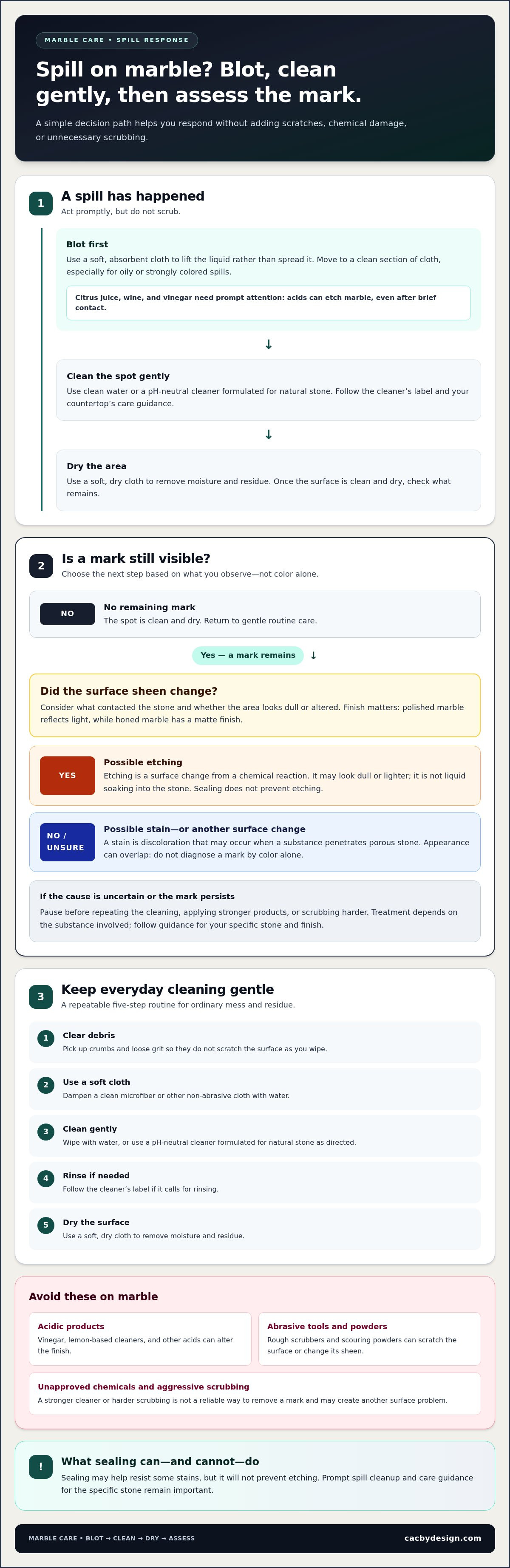
Act quickly, but don’t scrub. Blot a spill with a soft, absorbent cloth to lift the liquid rather than spreading it across the countertop. Remove residue with a marble-safe cleaning method, then dry the area. This limits the spill’s contact with the stone, but it can’t guarantee that every mark will disappear.
What to do when food or liquid spills
Use a clean section of cloth as you blot, especially for oily or strongly colored spills. Citrus juice, wine, and vinegar deserve prompt attention because acidic substances can etch marble’s surface. After blotting, gently clean the spot with clean water or a pH-neutral cleaner formulated for natural stone, following the label directions. Avoid home remedies that introduce acids, abrasives, or unverified chemicals.
Once the surface is clean and dry, assess what remains. Don’t immediately repeat the cleaning with more product or firmer pressure. The Natural Stone Institute guidelines offer additional care and cleaning direction for natural stone. Follow guidance that suits your specific stone and finish before trying a targeted treatment.
When a mark needs more than routine cleaning
Clean first, then inspect the dry area in good light. A residue mark may improve after gentle cleaning. A persistent change in sheen or a dull patch may point to etching, while discoloration may be consistent with a stain. These are clues, not a certain diagnosis. The stone, finish, and substance involved all affect how a mark looks.
Possible etching: The spot looks dull, hazy, or different in sheen from the surrounding surface.
Possible staining: Discoloration remains after surface residue has been cleaned away.
Unclear mark: Color alone can’t confirm the cause, and more than one kind of change may be present.
If gentle cleaning doesn’t help, stop experimenting with household products. A persistent mark or uneven finish may need an assessment beyond routine care. Professional stone restoration may be an option for persistent surface damage, but the appropriate method depends on the marble, its finish, and the type of change. A careful response is a key part of how to care for marble countertops: blot promptly, clean gently, then identify the problem before choosing a next step.
Sealing and Preventive Care: What Marble Countertops Really Need
Sealing can help reduce how readily some liquids absorb into marble, but it isn’t a force field. It won’t prevent etching from acidic substances, and it doesn’t make the stone stain-proof. Treat sealing as one part of a care plan, not a substitute for everyday prevention.
How to think about sealing marble
Whether and how often to seal depends on the specific stone, its finish, and the sealer used. Follow the care instructions for your slab and the sealer manufacturer’s label rather than relying on a universal resealing calendar. If you’re unsure what product was used or what care guidance applies, avoid adding a new treatment based on guesswork.
Sealer may help limit liquid absorption and staining, but it does not prevent acid etching or make marble stain-proof. Sealing can support stain resistance, while acidic spills can still alter the surface. Set realistic expectations and pair any sealer with practical habits.
Simple habits that reduce avoidable wear
Build protection into how you use the countertop. Small, repeatable choices reduce contact with spills and help keep grit from being dragged across the surface.
Use coasters under glasses, especially for drinks that may spill.
Prepare food on a cutting board rather than directly on the marble.
Wipe spills promptly instead of leaving liquids on the surface.
Lift away crumbs and grit before wiping, so abrasive debris doesn’t scratch the finish.
These steps don’t eliminate every risk, but they make prevention a routine instead of a rescue plan. They’re also worth considering as part of a kitchen layout, where material selection and daily use should work together. For project-planning ideas, explore this Cincinnati kitchen remodel guide.
Understanding the stone is central to how to care for marble countertops. The right approach depends on the surface in your home, not a one-size-fits-all schedule. If you’re planning a kitchen project with marble, explore marble countertop design and installation as part of your planning.
When to Call for Marble Countertop Restoration or Expert Guidance
Routine care has limits. If a mark remains after gentle cleaning, the finish looks uneven, or discoloration keeps returning, pause before trying another product or scrubbing harder. The change may be more than surface residue. Understanding what’s happening helps determine whether the countertop needs a different treatment or closer assessment.
Signs routine cleaning may not be enough
Look for persistent dull patches, visible scratches or other surface damage, and recurring discoloration. Cleaning can remove residue, but it can’t necessarily reverse etching, scratches, or changes to the finish. A mark’s appearance offers clues, not a diagnosis. Avoid aggressive DIY treatments, which may make the surface more uneven or complicate later restoration.
An assessment can help clarify the next step. Restoration methods depend on the specific marble, its finish, and the type and extent of damage. Some issues may call for a surface treatment; others may need a different approach. No single method suits every countertop, and not every stain or damaged area can be fully restored. Identify the problem before choosing a treatment.
Keep marble care connected to the full countertop project
A countertop’s long-term experience starts before everyday cleaning. Material selection, fabrication, and installation all shape the finished surface and how it fits the kitchen. When planning a project, consider the stone and finish alongside how you’ll use and care for the countertop.
If you’re comparing natural-stone options for a future project, this Cincinnati granite countertop guide offers a useful point of comparison. Different stones have different characteristics, so choose based on the look, use, and care considerations that matter in your home.
The best how to care for marble countertops plan combines gentle routine care with realistic expectations. For countertop and remodeling inspiration, explore Countertops and Cabinetry By Design.
Make Marble Care a Simple, Lasting Habit
The best way to care for marble countertops is to keep the routine gentle and consistent. Use a soft cloth and stone-safe cleaner, blot spills promptly, and use practical protections such as cutting boards and coasters. Sealing may help reduce absorption, but it won’t prevent etching, so identify the type of mark before deciding what to do next.
When a mark persists or the finish looks uneven, routine cleaning may not be enough. The right next step depends on the stone, finish, and damage. Knowing those details helps you protect the countertop and set realistic expectations for restoration.
For a new project, Countertops and Cabinetry By Design brings together marble countertop selection, fabrication, and installation within a full-service remodeling approach. The family-owned and operated business serves homeowners across the Cincinnati area, including Hamilton, Butler, Warren, Montgomery, Green, Clinton, Clermont, and Brown counties. Explore countertop and remodeling services to plan a space designed for everyday life.
Frequently Asked Questions
What is the best way to clean marble countertops every day?
Use a soft, non-abrasive cloth with clean water or a pH-neutral cleaner formulated for natural stone. Clear away crumbs first so grit doesn’t drag across the surface, then wipe gently and dry with a clean cloth. Follow the cleaner’s label and any care instructions for your specific countertop. Don’t assume an all-purpose kitchen cleaner is suitable for marble, even if it’s safe for other surfaces.
Can I use vinegar or lemon juice on marble countertops?
No. Vinegar and lemon juice are acidic, and acids can react with marble and dull or alter its finish. Don’t use them as cleaners or home remedies on the countertop. If either spills, blot it promptly with a soft cloth, remove residue using a marble-safe cleaning method, and dry the area. Quick cleanup can limit contact, but it can’t guarantee that etching won’t occur.
Does sealing marble prevent stains and etching?
No. A suitable sealer may reduce how readily some liquids absorb into marble, helping resist certain stains. It does not make the stone stain-proof, and it doesn’t prevent etching, which is a surface change caused by contact with acids. Treat sealing as one part of care, alongside prompt spill cleanup and protective habits. Follow guidance for your slab and the sealer rather than relying on a universal schedule.
How do I remove a stain from a marble countertop?
Start by cleaning the surface gently with a marble-safe method, then dry it and reassess the mark. If discoloration remains, don’t scrub harder or apply an acidic, abrasive, or unverified treatment. The right response depends on what caused the mark and on the stone and finish. A persistent mark may need a stone-specific treatment or professional assessment; not every stain can be removed completely.
What is the difference between a marble stain and an etch mark?
A stain is discoloration that may occur when a substance penetrates porous stone. An etch is a change to the marble’s surface caused by a chemical reaction, often appearing as a dull or altered-sheen area. These clues don’t confirm the cause: color alone isn’t a reliable diagnosis, and different marks can look similar. Clean gently, then assess the dry surface.
How often should marble countertops be sealed?
There isn’t one schedule that suits every marble countertop. Sealing needs can depend on the stone, its finish, and the specific sealer, so follow slab-specific care instructions and the sealer manufacturer’s directions. Don’t reseal automatically based on a general calendar. If you don’t know what guidance applies to your countertop, seek advice based on its material and treatment before applying another product.
Are marble countertops difficult to maintain?
Marble takes consistent, thoughtful care, but the everyday routine is straightforward: clean gently, wipe spills promptly, and use coasters and cutting boards. The key is knowing that sealing may help resist some stains but won’t prevent etching. For homeowners across the Cincinnati area, including Hamilton, Butler, and nearby counties, care guidance suited to the particular stone and finish helps set realistic expectations and protect the surface.


Comments