
Farmhouse Sink Pros and Cons: Appearance, Durability, and Drain Needs
A farmhouse sink takes its name from rural homes, where it was used before running water was widely available. Its exposed front, also called an apron front, extends beyond the countertop, making a practical basin a visible kitchen feature. The farmhouse sink pros and cons come down to that combination: a distinctive look and deep basin, balanced against installation and care requirements.
That prominent apron can make the sink a kitchen focal point rather than just another fixture. Its wide, deep bowl accommodates oversized cookware, but its depth and weight can affect cabinetry, countertop fit, and drainage.
This guide covers the look, fireclay’s durability, and the practical details of choosing and installing a farmhouse sink. You’ll learn how it compares with standard sink styles and what to consider when deciding whether its design and everyday function suit your kitchen.
Table of Contents
Do farmhouse sinks need a special drain?
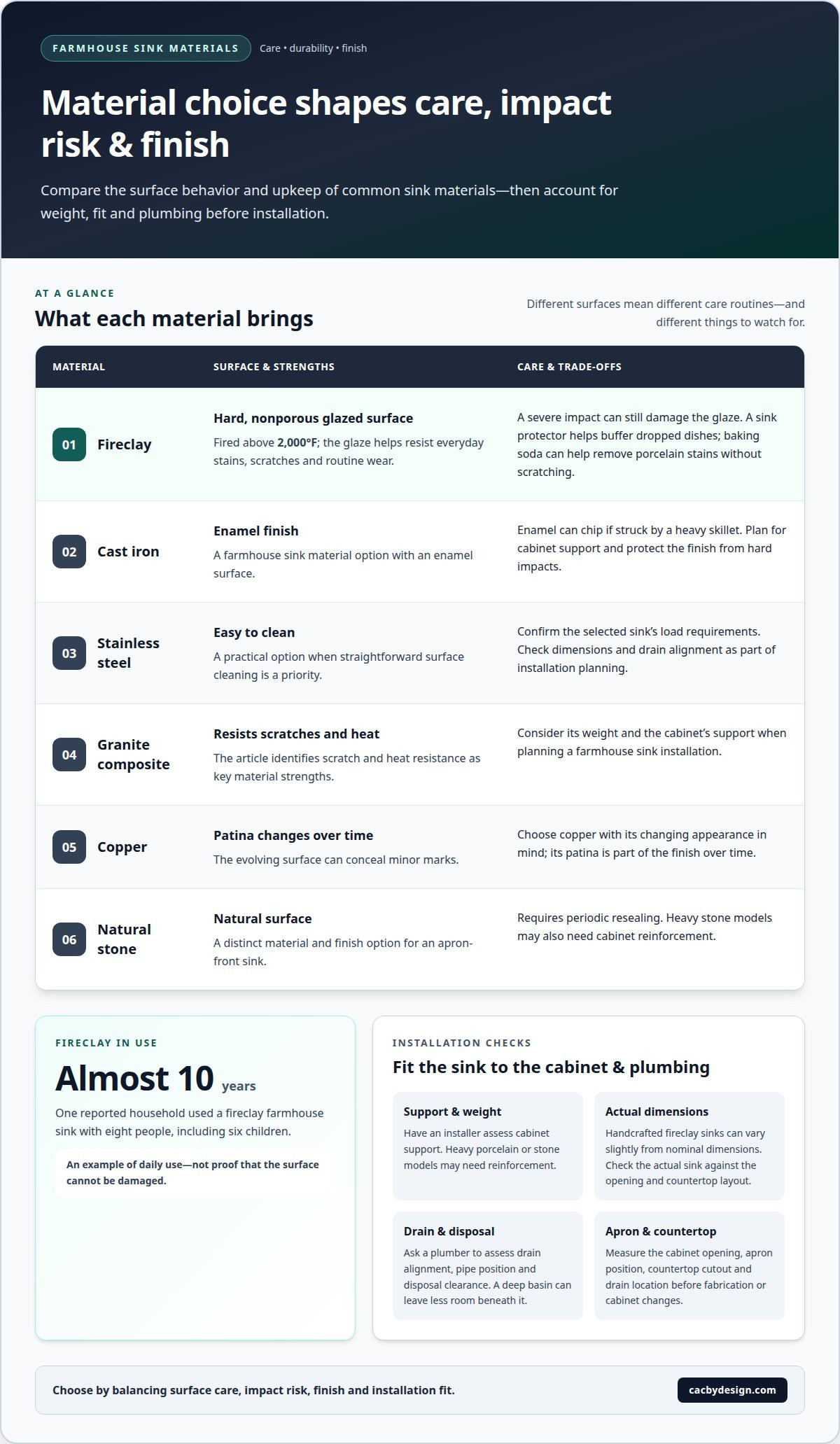
A farmhouse sink doesn’t automatically need a special drain, but its depth may require drainage adjustments. Before installation, have a plumber assess drain alignment, disposal clearance, and the existing pipe position. A deep basin can leave less room beneath it for the trap and disposal, so sink dimensions matter. Include local installation requirements in the plumbing plan.
Common problems depend on the material and fit. Cast iron enamel can chip if struck by a heavy skillet. Fireclay resists everyday scratches and stains, but a severe impact can damage its glaze. Water can also run down the exposed apron and onto the cabinet front.
Weight affects cabinet planning. Before cutting the countertop, have an installer assess the cabinet support and reinforce it if needed.
Retrofitting an existing kitchen may require cabinet or countertop adjustments because farmhouse sinks are often wider and deeper than standard models. Before fitting the sink, a professional installer measures the cabinet opening, apron position, countertop cutout, and drain location. This helps reveal conflicts before fabrication or cabinet changes begin.
Installation costs vary with the sink material and size, plus cabinet work, countertop cutting, drainage changes, and disposal fit. The price depends on the case and is given after a quote request. A deep basin may require drainage adjustments, while a disposal that doesn’t fit the sink can add installation work.
Fireclay durability and resistance to scratches and chips
Fireclay farmhouse sinks are fired above 2,000°F, producing a hard, nonporous glazed surface. That glaze helps resist stains, scratches, and routine wear. It isn’t invulnerable: a severe impact can still damage the finish. A sink protector adds a practical buffer between the basin and dropped dishes, while baking soda can help remove porcelain stains without scratching the surface.
For a busy kitchen, match the maintenance to the material. Stainless steel is easy to clean. Granite composite resists scratches and heat, while copper develops a patina that can conceal minor marks. Natural stone needs periodic resealing. Fireclay has a smooth, bright appearance, but a hard knock can chip its glaze.
Weight and sizing matter when installing a fireclay sink. Handcrafted sinks can vary slightly from their nominal dimensions, so measurements for the cabinet and countertop must account for the actual sink. This is especially important in a remodel, where even a small size difference can affect the opening. During planning, coordinate the sink dimensions with the cabinet and countertop layout.
Heavy household use provides another durability test. One reported household used a fireclay farmhouse sink for almost 10 years, with eight people and six children. That experience illustrates the material’s potential for daily use, not immunity to damage. A sink protector can help prevent scratches and reduce the chance of dishes breaking against the basin.
Appearance is another factor. A glazed surface keeps its look crisp, while copper’s patina changes over time and natural stone needs periodic resealing. Compare the finish you want with the maintenance you’re prepared to do. When choosing among farmhouse sinks, weigh surface care and impact risk, and consider how the basin will look in your kitchen over time.
Farmhouse sink appearance and kitchen focal point
The farmhouse sink’s name reflects its history: it was common in rural homes during periods without running water. Its defining feature is the apron front, a visible panel that extends beyond the countertop edge. This gives the sink a different profile from a standard sink, whose rim or basin sits within the counter. The name describes both its origins and its distinctive form.
The front panel makes the sink part of the kitchen’s visual composition. Rather than disappearing below the counter, an apron-front sink creates a focal point at cabinet level. Scale matters: a broad apron can anchor a long countertop, while a smaller basin may suit a compact kitchen better. Consider the view from the main entrance and nearby dining area as well as from the work zone.
Bowl configuration also affects the look. Farmhouse sinks come in single-bowl and double-bowl designs. One uninterrupted basin gives the apron a clean, simple appearance, while a double bowl divides the sink visually and functionally. Material adds another distinction: fireclay, stainless steel, cast iron, granite composite, and copper each give the same apron-front shape a different surface and finish.
Treat the sink as a feature and coordinate the surrounding details. During a remodel, compare the apron’s width with cabinet fronts, countertop edges, and nearby hardware. Faucet placement matters too: farmhouse sinks usually lack pre-drilled faucet holes, so the faucet can go in the countertop or another suitable location. That flexibility helps shape the finished design, but means you should plan the sink and faucet together.
The takeaway is simple: choose an apron sink if you want the basin to contribute visibly to the kitchen’s design. If you prefer a less prominent sink, a standard style may suit you better. Either way, consider the whole arrangement, including the front panel, bowl layout, countertop, and cabinet proportions, rather than choosing by appearance alone.
How does a farmhouse sink compare with a standard undermount or drop-in sink?
A farmhouse sink changes how you access the basin and plan the countertop. Its apron front meets the cabinetry, allowing you to stand closer while washing dishes. An undermount sink sits below the counter, while a drop-in sink rests on top by its rim. Both standard styles keep the basin less visually prominent. The farmhouse sink pros and cons depend on which setup best suits your kitchen routine and design priorities.
Capacity is a clear advantage of farmhouse models. Their deep, wide bowls can hold oversized pots, baking trays, roasting pans, and serving platters. A single-bowl design offers one open space for washing bulky cookware. A smaller standard basin may require more repositioning to clean large pans. The depth has a trade-off: glasses and dishes can break more easily if knocked against the basin.
An apron-front installation also changes cleanup. Water can drip down the exposed apron and onto the cabinet front, unlike with standard sinks that don’t have this exposed panel. Farmhouse sinks usually lack pre-drilled faucet holes, offering more placement flexibility. Plan the faucet and sink together so the faucet reaches the basin comfortably and works with the countertop layout.
Use your routine to decide. If you regularly wash roasting pans or serving platters, a broad basin can simplify cleanup. If you prefer a less prominent sink or want to avoid an exposed front, an undermount or drop-in may fit better. For a remodel, coordinate bowl size, cabinet front, faucet placement, and countertop cutout. Those practical details sharpen the farmhouse sink pros and cons for your specific kitchen. Plan your sink and countertop layout around the cookware you use and the look you want.
Countertops and Cabinetry By Design: Sinks
Countertops and Cabinetry By Design helps coordinate sink, countertop, and cabinet choices for a cohesive kitchen plan. If you’re considering a farmhouse sink, the next step is to match its apron, bowl, and installation requirements with the surrounding surfaces and storage.
Choose a sink alongside the countertop. Marble, quartzite, and quartz each create a different look around an exposed apron front. Coordinating these materials with kitchen cabinets helps the sink feel intentional rather than like an afterthought. When planning a kitchen update, Countertops and Cabinetry By Design can help bring these choices together.
Turn Your Sink Choice Into a Kitchen Plan
Make the decision based on the kitchen you want to use every day, not a trend in isolation. First, define your priorities: a visual centerpiece, an easy-to-maintain surface, or a basin suited to your cooking routine. Then consider how the sink should work with the cabinetry, faucet placement, and countertop design. This gives each choice a clear purpose and helps keep the finished space cohesive.
The farmhouse sink pros and cons become easier to weigh when you connect them to your own habits and design priorities. Countertops and Cabinetry By Design offers marble, quartzite, and quartz countertops to complement a considered kitchen layout. Bring your project goals together and contact Countertops and Cabinetry By Design to discuss the next step.
A well-planned kitchen starts with choices that suit your space and routine. Move forward with a clear vision, then build from there.
Frequently Asked Questions
What are the main pros and cons of a farmhouse sink?
A farmhouse sink combines a visible apron front with a roomy basin, but its fitted design can make later changes more involved. It may suit a kitchen where large cookware is common and the sink is meant to stand out. Consider the daily trade-offs too: the exposed front may need wiping, and replacing a fitted sink can affect surrounding surfaces.
How much does a farmhouse sink cost, including installation?
The total depends on the sink’s material and size, plus the work needed for cabinets, countertops, plumbing, and disposal fit. The price depends on the case and is given after a quote request. A straightforward replacement and a remodel requiring cabinet changes or a new countertop opening involve different scopes, so assess the full installation plan rather than the sink alone.
What materials are farmhouse sinks made from, and how do they compare for durability and maintenance?
Farmhouse sinks are made from fireclay, stainless steel, granite composite, cast iron, copper, and natural stone. Stainless steel is easy to clean, while granite composite resists scratches and heat. Copper develops a changing patina; natural stone requires resealing. Cast iron has a porcelain-enamel coating, and fireclay’s glazed surface resists routine wear but can be damaged by a severe impact.
Do farmhouse sinks require special cabinets or countertop modifications?
Often, yes. The cabinet opening and countertop edge must accommodate the sink’s apron and bowl dimensions, and a heavy model may need additional support. In a remodel, include faucet placement and space for the drain assembly or disposal in the layout. Measuring the actual sink before cutting helps account for slight dimension variations in handcrafted fireclay models.
How difficult is it to install or replace a farmhouse sink?
Installation can be demanding because the sink must fit the cabinet, countertop opening, and plumbing layout together. Replacing a farmhouse sink can be more involved than replacing a standard sink: countertops and cabinets are built around the apron, so removal may affect surrounding finishes. For homeowners in Hamilton, Butler, Warren, Montgomery, Green, Clinton, Clermont, and Brown counties, professional installation can coordinate sink fit and cabinetry work.



Comments