
What to Ask a Remodeling Contractor About References
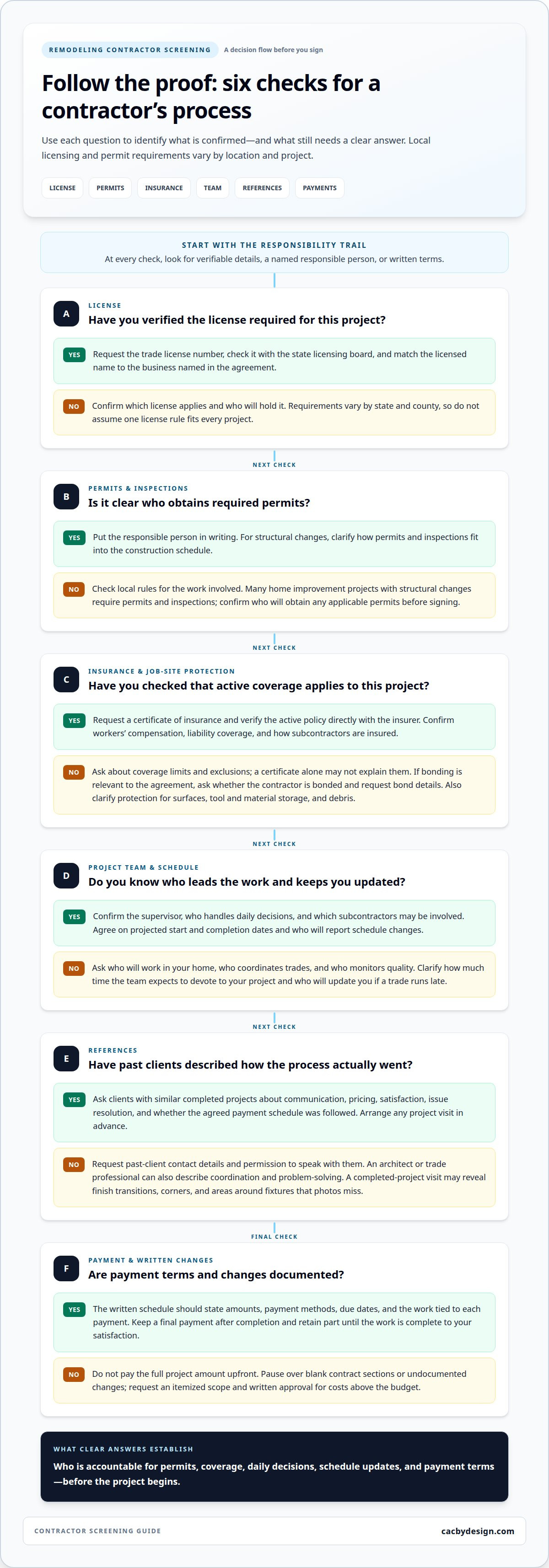
References are useful when you ask about the work behind them. Knowing what to ask a remodeling contractor means asking past clients about communication, pricing, satisfaction, and how problems were resolved. You can also ask to arrange a visit to a completed project.
It’s a practical starting point, but it shouldn’t be your only screening step. A polished portfolio won’t tell you who will be in your home, how the project will be managed, or what happens when plans change.
This guide lays out the questions that make those details clear before you hire. You’ll learn what to ask about references, licensing and insurance, project teams and subcontractors, schedules, permits, communication, and design-build services. The goal is simple: understand the contractor’s process, the people responsible for the work, and how decisions will be handled before the project begins.
Table of Contents
1. Licensing and insurance
Ask which license the project requires and who will hold it. Remodeling contractor licensing and insurance requirements vary by state and county. Permit requirements also depend on local rules and the work involved. Many home improvement projects involving structural changes require permits and inspections. Before signing, clarify who will obtain applicable permits and confirm that responsibility in writing.
To verify a license, request the contractor’s trade license number and check it with the state licensing board. Match the name on the license to the business named in your agreement. For work involving a structural change, ask how permits and inspections fit the construction schedule. Clear answers show who is accountable at each step.
Request a certificate of insurance, then verify the coverage and active policy directly with the insurance company. Ask about workers’ compensation and liability insurance for the work being performed. Confirm that the coverage applies to the project and ask how subcontractors are insured. If bonding is relevant to the agreement, ask whether the contractor is bonded and request the bond details. Don’t assume a certificate alone explains every limit or exclusion.
Insurance also relates to job-site safety. Ask how the crew will protect surfaces, secure tools and materials, and keep the work area clean. For example, clarify where construction debris goes and how tools are stored when workers leave. These details show how the contractor plans to manage daily risks in your home.
Request recent clients’ contact details and ask about communication, pricing, satisfaction, and how issues were resolved. A reference can also tell you whether the contractor followed the agreed payment schedule. Before signing, discuss what any guarantee covers and when payments are due. Don’t pay the full project amount upfront; retain part until the work is complete to your satisfaction.
Licensing requirements vary by state and county, while permit requirements depend on local rules and the type of work. Confirm which license applies and who will obtain the required permits.
2. Project teams and subcontractors
Ask who will work in your home, who supervises the work, and who handles daily decisions. Remodeling contractors may use subcontractors for specialty trades, so clarify each person’s role and when they’ll be on site. A dedicated site supervisor can coordinate trades, monitor quality, and communicate with you and the architect. Larger residential projects may also need a project manager.
Look for experience that matches the building and project scope. A contractor focused on new-home construction may have less experience with existing structures. Review completed projects similar to yours, then ask what went wrong on one and how the team handled it. A specific example can reveal how the contractor responds to delays, unexpected conditions, or quality concerns. Ask how warranty issues are handled after the work is complete.
Set timeline expectations before hiring. Ask for projected start and completion dates, how many projects the contractor is managing, and how much time the team expects to devote to yours. Remodeling work can involve tradespeople in your home for several weeks. Confirm who will update you if a trade runs late or the schedule changes.
A remodeling payment schedule may include a deposit, payments during the project, and a final payment after completion. Agree in writing on amounts, methods, due dates, and the work tied to each payment. Avoid paying the full project amount upfront, and retain part until the work is complete to your satisfaction.
Warning signs include demands for full payment upfront, a contract with blank sections, or refusal to document changes. If cost details are missing, pause and request an itemized scope and written approval for costs above the budget. Before signing, confirm who is responsible for coordinating trades, communicating schedule changes, and resolving problems. Those answers show how the team plans to manage the work.
3. Do You Have a List of References?
Ask for references from clients whose completed projects resemble your planned remodel. A kitchen renovation reference can speak to decisions specific to that room. Knowing what to ask a remodeling contractor helps you move beyond a general satisfaction rating. Request permission to speak with past clients and ask whether you can view completed work. Arrange any visit in advance.
References can include more than homeowners. Ask whether an architect or trade professional who worked with the contractor can describe coordination, communication, and problem-solving. An architect may explain how design decisions were managed, while a trade professional can share how the work was organized. These perspectives reveal different parts of the project process.
Prepare focused questions for past clients. Ask whether communication stayed clear, pricing matched expectations, and the contractor resolved issues effectively. Find out how the team handled changes to plans or unexpected problems. To make the most of your questions, consider which answers matter most to your priorities, such as schedule updates or clarity about project decisions.
A visit to a completed project can reveal details that photos miss. Look closely at finish transitions, corners, and areas around fixtures. Ask the homeowner what they would change about the process and whether the finished work met their expectations. Arrange the visit in advance and respect the homeowner’s privacy.
The National Association of the Remodeling Industry (NARI) offers a member list for homeowners seeking contractors in their area. Treat membership as one research point, not a replacement for direct client feedback. Compare what references say about communication, pricing, and issue resolution, then note any questions that still need clear answers.
4. Contractor process and design-build services
A renovation needs a defined process, not just a start date. Ask for the sequence from design and drawings through material ordering, construction, and final review. A design-build contractor may manage these stages together, including renderings, fixture and finish selection, permitting, and building materials. Clarify which decisions you’ll make and who is responsible for each handoff.
Who obtains permits and schedules inspections for a remodel? Agree in writing whether the contractor will obtain applicable permits and coordinate required inspections. Ask how the plan addresses local building standards, especially for structural work or a home addition. The contract should make responsibilities clear before construction begins.
Ask how the project timeline will take shape. An early schedule is general until the design is complete, and a start date can depend on permit review or finished drawings. Set progress milestones, confirm proposed work hours, and agree how schedule updates will reach you. Choose one main point of contact and ask about the communication method and expected response time.
Scope control matters once construction begins. Ask how the contractor documents a change, explains its effect on the schedule and compensation, and gets your approval before proceeding. The agreement should detail the work and itemized costs, with no blank sections when signed. Record approved changes in writing, acknowledged by everyone involved. This creates a clear decision trail if plans shift.
Use these questions to assess whether the process fits your priorities: one coordinated team, clear responsibility, and visible milestones. If you’re ready to map out a renovation, start planning your remodeling project.
Countertops and Cabinetry By Design
Countertops and Cabinetry By Design helps homeowners turn contractor questions into clear kitchen and bathroom remodeling decisions. Its full-service approach includes design, material selection, and professional installation by an in-house team of craftsmen. You can discuss how countertop choices fit the project, the room, and your design plans.
For a remodel, explore options such as marble, quartzite, quartz, and granite countertops. Considering materials alongside the broader design helps connect finish choices with the project’s overall direction. Bring your priorities and questions about the remodeling process to the conversation so the next steps reflect what you want from the finished space.
Contact Countertops and Cabinetry By Design to discuss your kitchen or bathroom remodeling plans.
Turn Your Questions Into a Clear Next Step
Before moving from research to a contract, turn your priorities into a short project brief. Note what matters most in the finished room, which decisions remain open, and how you want project updates handled. This gives your planning conversation a clear agenda and keeps design choices connected to how you use the space.
Knowing what to ask a remodeling contractor is one part of making a sound decision. The other is being clear about your own goals. Identify essential outcomes, where you can stay flexible, and what you need explained before approving a change. This clarity helps you decide whether the proposed process fits your priorities.
Use your notes to begin a practical conversation about your remodeling plans. Contact Countertops and Cabinetry By Design to discuss the next steps for your project. You’re ready to move forward with sharper priorities and a more confident plan.
Frequently Asked Questions
Do You Have a List of References?
Ask for references from clients whose projects match your priorities, such as a household that needed to keep using part of the home during construction. Ask what they would plan differently if starting again. That question can reveal practical lessons beyond general satisfaction. If a reference agrees, arrange a conversation at a convenient time and ask permission before visiting the completed space.
Are You Licensed for This Type of Project?
Ask whether the project requires a trade license in your area and request the contractor’s license number. Requirements vary by state and county, so verify the number with the relevant state licensing board. Check that the license holder’s name matches the business on your proposed agreement. For specialized work, clarify which trades need separate credentials and who will be responsible for them.
Do You Offer a Guarantee or Warranty on Your Services?
Ask for the written warranty terms before signing. The document should explain which work is covered, how to report a problem, and what steps follow a claim. Separate the contractor’s workmanship coverage from manufacturer warranties for materials, since they can have different terms and processes. For example, ask who handles an installation concern and where to direct a product issue.
How Many Projects Have You Completed in My Area?
Ask how many completed projects the contractor has nearby, then focus on whether those jobs resemble your scope and home. A count alone won’t show how well the contractor handled a particular challenge. Request an example involving a similar layout, finish, or renovation constraint. Then ask what decisions shaped the result and whether the homeowner’s priorities were met.
How long does your warranty on the work last?
General contractor warranties on work commonly last between one and five years. The appropriate term depends on the agreement and project, so ask for the exact duration and start date in writing. Also clarify whether coverage applies to labor, materials, or both. Manufacturer warranties are separate and vary by product, so keep those documents with the signed remodeling contract.
How many projects are you working on right now?
Ask how many active jobs the contractor is managing and who will oversee yours day to day. The count matters less than the time and supervision assigned to your project. For example, ask how site visits, trade coordination, and schedule updates will work during busy construction phases. A specific staffing plan helps you understand how the contractor will maintain attention on your home.



Comments