
Granite Near You: Compare Materials, Slabs, and Installation
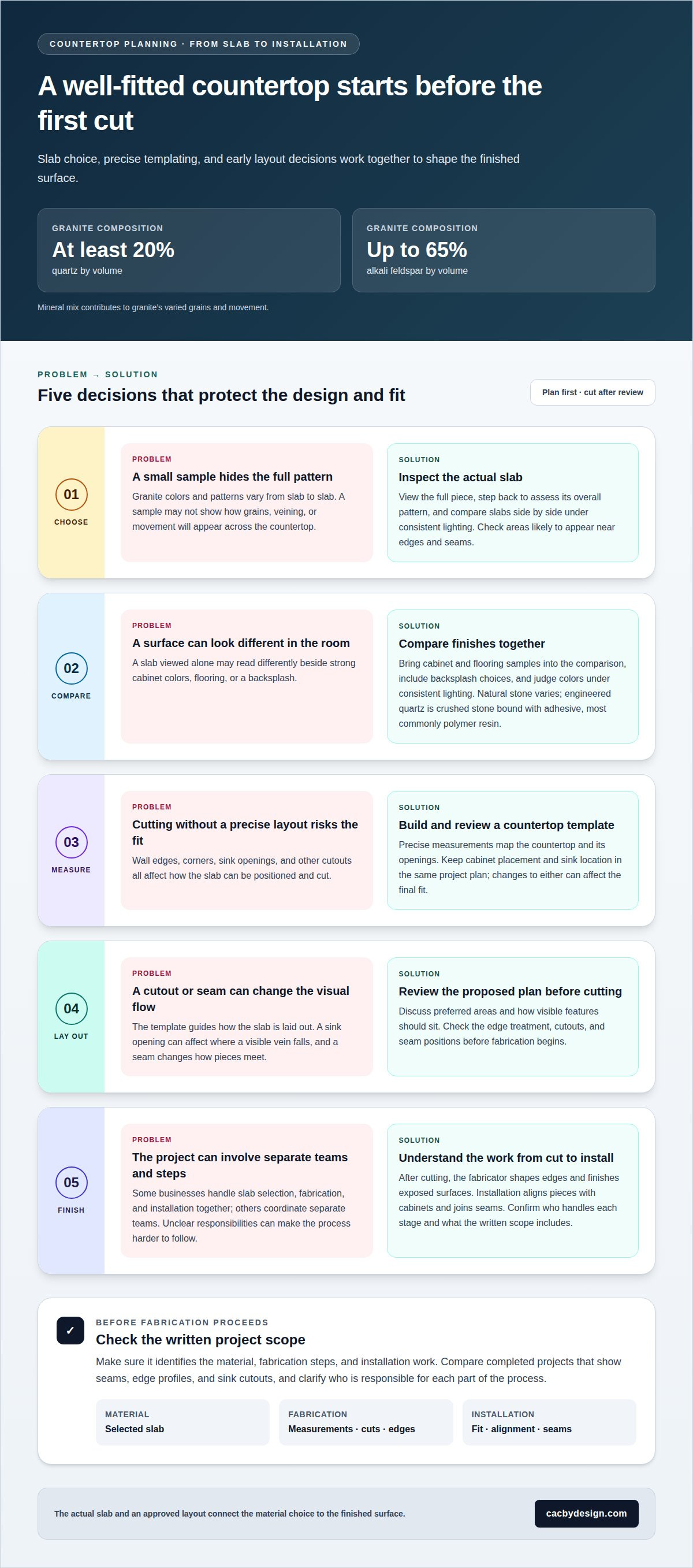
The slab matters as much as the stone. Searching for granite near me should lead to more than a color sample: you can choose the specific slab for your project before fabrication begins. Its natural pattern, color, and movement become part of the finished countertop, so viewing the actual piece gives you a clearer sense of the result.
Choosing a slab is only one part of getting the right countertop. Compare granite with marble, quartz, and quartzite, and consider how measurement, fabrication, and installation affect the final fit. Each step shapes how the surface looks and works in your kitchen or bathroom.
This guide covers those decisions in a practical order. Learn how the materials differ, what to look for when selecting a slab, and how a countertop goes from template to installation. You’ll also see how fabrication connects your material choice to a finished surface designed for your space.
Table of Contents
Granite, marble, quartz, and quartzite materials
Granite, marble, quartz, and quartzite offer distinct looks and trade-offs. Granite is natural stone, with at least 20% quartz by volume and up to 65% alkali feldspar by volume. Its mineral mix creates varied grains and movement. Quartzite is natural stone too, often selected for veining. Marble has a different visual profile, with flowing veins and softer color contrasts. Quartz countertops use engineered stone: crushed stone bound with an adhesive, most commonly polymer resin.
Granite colors and patterns vary from slab to slab. You may find white backgrounds with gray movement, dark fields with lighter flecks, or warmer tones with contrasting mineral grains. View full slabs, not just small samples, to judge how the pattern will look across a countertop. Compare slabs side by side under consistent lighting to spot differences in color, veining, and grain.
Granite warranties vary by seller and product. Read the written terms for covered defects, exclusions, care requirements, and the claims process. A warranty may address specific material or workmanship issues, but the coverage depends on the document. Compare the actual terms rather than assuming every granite countertop has the same protection.
Local reviews and ratings can reveal how suppliers handle slab selection, communication, and installation. On Google or Houzz, read detailed project reviews alongside star ratings. Look for comments describing a completed countertop, the fit, and how concerns were handled. Specific examples give more context than a rating alone.
Compare surfaces by appearance first, then consider how each fits your household’s routine. Granite’s natural pattern varies from slab to slab, while quartz is an engineered stone. Marble has distinctive veining, and quartzite is another natural-stone option. Compare samples with your cabinet colors and backsplash before deciding. If the exact slab matters, select it before fabrication so its visible pattern can guide the final design.
Granite fabrication and installation
Fabrication turns a selected granite slab into a fitted kitchen surface. Installation positions and secures the finished pieces.
Choosing a Granite Installer
If you’re looking for granite near me in the Cincinnati area, compare completed projects and clear descriptions of the work. Look for examples showing seams, edge profiles, and sink cutouts. Find out how the process moves from measurement through installation and who handles each step. Compare those examples with your cabinet layout and chosen slab, not just showroom displays.
Local Suppliers and Fabricators
Some businesses handle slab selection, fabrication, and installation under one roof; others coordinate separate teams. Across Hamilton, Butler, Warren, Montgomery, Green, Clinton, Clermont, and Brown counties, compare project portfolios and the work included. Check whether you can choose the slab for your project, then consider how its pattern will guide cuts and seam placement. Countertops and Cabinetry By Design handles countertop design, fabrication, and installation with its in-house team.
Fabrication begins with precise measurements and a countertop template. The template maps wall edges, corners, sink openings, and other cutouts, guiding how the slab is laid out. For example, a sink opening can affect where a visible vein falls. Review the proposed layout before cutting, including the edge treatment and seam positions.
After cutting, the fabricator shapes the edges and finishes exposed surfaces. Installation aligns the pieces with the cabinets and joins the seams. Accurate measurements and early decisions help these stages work together. In a Cincinnati kitchen, keep cabinet placement and sink location in the same project plan, since changes to either can affect the countertop’s final fit.
Before proceeding, compare the written project scope with your design. Make sure it identifies the material, fabrication steps, and installation work. If you’re comparing granite near me options, these details help you understand how each project will be completed. A clear scope makes the next decisions easier.
Natural and engineered stone slabs
Slab selection shapes the look of a remodeled room. Natural stone has patterns formed within each piece, so two slabs of the same stone can look different. Engineered stone combines crushed stone with adhesive, most commonly polymer resin. The material you choose affects how the countertop works with cabinets, flooring, and backsplashes. A bold surface can anchor a simple kitchen palette, while subtle movement can complement detailed cabinetry.
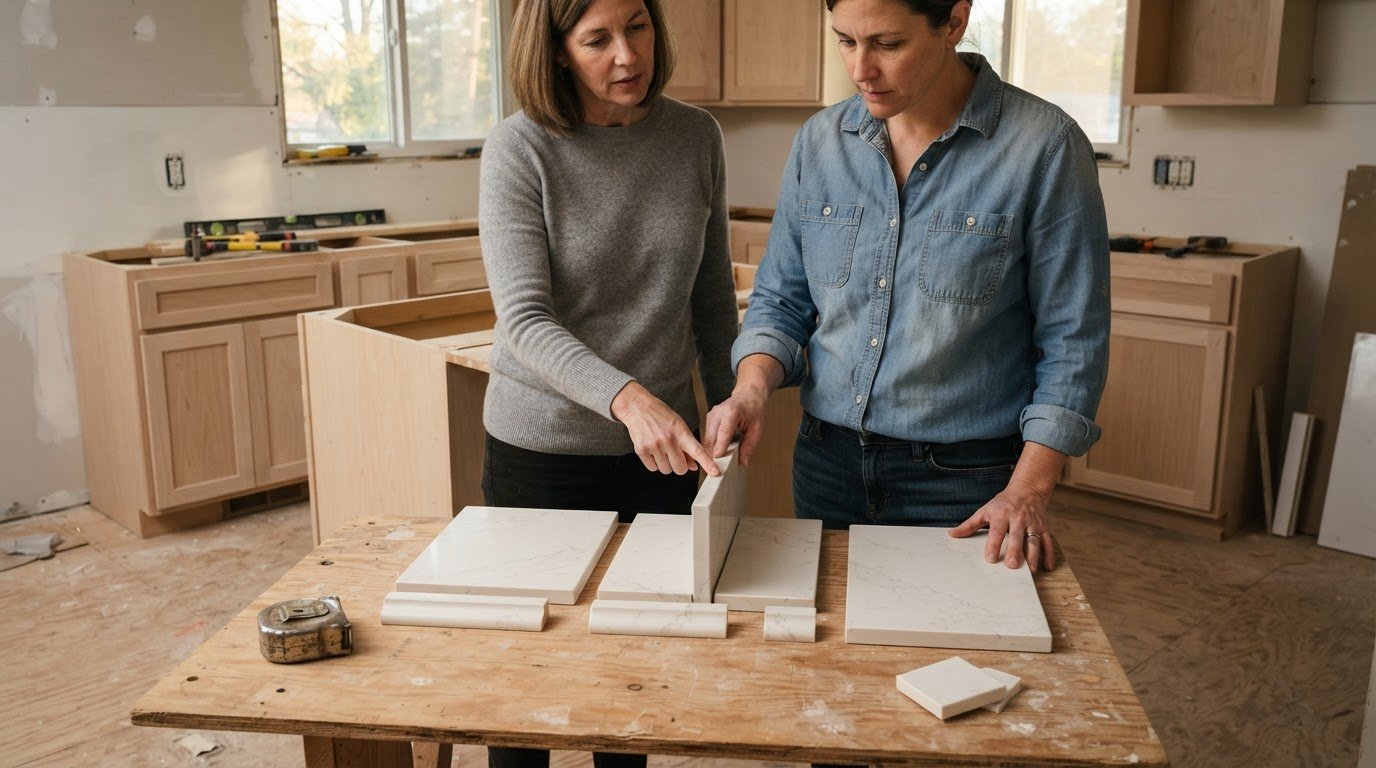
View the full slab, not just a small sample. Step back to assess its overall pattern, then inspect areas likely to appear near edges or seams. A dramatic vein can become a focal point across an island, while smaller mineral movement may suit a quieter layout. Compare the slab with cabinet and flooring samples under consistent lighting to judge how the colors work together.
Natural stone selection calls for attention to variation. Granite and marble have distinct patterns, and individual slabs differ. Marking preferred areas can help guide layout decisions before fabrication. For example, a visible vein can run across a counter or stay clear of a sink opening. Discuss your priorities during design so the cut plan supports the look you want.
Engineered stone has a different composition from natural stone. Its blend of crushed stone and adhesive creates a manufactured surface. Compare its pattern with the specific natural slabs you’re considering. A more consistent appearance may suit coordinated cabinets and flooring, while natural variation can create a distinctive focal point. Let the room’s finishes and the look you want guide the comparison.
Use a practical selection sequence: inspect the full slab, compare it with cabinet and flooring samples, then review how fabrication will position its features. Include backsplash choices in the comparison. A sample that looks balanced on its own may read differently beside a strong cabinet color. These steps connect material selection to the full remodeling plan instead of treating the slab as an isolated choice.
Treat listed pricing as one comparison point alongside the slab’s pattern and its fit with the room. Visual priorities and fabrication plans still determine whether a surface suits the design.
Granite countertop suppliers and fabricators near me
Consider how slab selection, countertop fabrication, and installation are handled. Some businesses manage all three stages; others coordinate separate teams. That distinction clarifies who oversees decisions, from viewing the slab to preparing the finished countertop. For projects in Hamilton, Butler, Warren, Montgomery, Green, Clinton, Clermont, or Brown County, compare the full scope, not just the showroom experience. Countertops and Cabinetry By Design handles the process from slab selection through installation with its in-house team.
Project portfolios show how a fabricator handles finished details. Look for installed kitchens with visible seams, finished edges, sink openings, and aligned counter runs. An island is a useful example: compare its edge treatment with the surrounding counters. Photos of complete rooms also show how the stone works alongside cabinets and backsplashes. Focus on projects similar to your layout rather than relying on broad claims.
Build a focused shortlist around your project. First, note your preferred granite appearance and countertop layout. Then compare slab-selection processes and completed fabrication examples. Review how each business handles measurement, cutting, and installation. If your kitchen includes an island and sink cutout, look for projects featuring both. These specifics help you assess how the process fits your design.
Customer reviews can add context to project portfolios. Prioritize comments about communication, measurements, installation, or finished seams. A detailed account of a kitchen project offers more insight than praise without examples. Look for recurring themes in how customers describe project coordination, making reviews a practical part of your local comparison rather than relying on star ratings alone.
Before choosing, record each business’s slab-selection process, fabrication scope, and installation responsibilities. Save relevant project photos and note how they relate to your layout. For an island, consider how pattern direction and seams may affect the final appearance. A structured comparison helps match local options to your design priorities. Discuss your granite countertop project as you plan the next step.
For comparison, Houzz lists 129 granite countertop professionals serving Maricopa, Arizona, within a 50-mile radius. Treat that count as a broad starting point, then verify each candidate’s service area and project fit directly.
Countertops and Cabinetry By Design: Marble Countertops
Countertops and Cabinetry By Design connects material selection with countertop fabrication and installation. When you’re ready to compare materials and plan a finished surface for your space, the team can help. Options include marble, quartzite, quartz, and granite countertops.
Design guidance helps match the stone’s appearance to your room and project goals. Once you select a material, custom fabrication and professional installation bring the plan together. This coordinated process keeps the slab, layout, and finished countertop in view as connected decisions.
For a kitchen or bathroom project, discuss which surface fits your design and how it will move from selection to installation. Contact Countertops and Cabinetry By Design to plan your countertop project.
Choose a Surface That Fits Your Next Chapter
The right granite near me is a slab that fits your room, routine, and design priorities. Make the decision with the finished space in mind, not as an isolated material choice. Cabinet color, lighting, and countertop layout all affect how the stone looks once installed.
Before moving ahead, decide what matters most: natural variation, a more consistent look, or distinctive veining. Then consider how your chosen surface will work with the rest of the room. Countertops and Cabinetry By Design offers marble, quartzite, and quartz alongside granite, giving you materials to compare as you refine your project.
A clear design priority makes the next conversation more productive. Bring your preferred look and project goals into the planning process, then align material selection with the finished space you want. Contact Countertops and Cabinetry By Design to discuss your countertop project. Move forward with a choice that feels considered, cohesive, and right for your home.
Frequently Asked Questions
Can I choose the exact slab for my project?
Yes, you can select the specific slab for your countertop project. This matters when a distinctive pattern will be prominent on an island or counter run. In Hamilton, Butler, Warren, Montgomery, Green, Clinton, Clermont, or Brown County, discuss your preferred slab during design and fabrication planning. That connects your material choice to the finished countertop.
What's the difference between prefabricated and slab granite?
Prefabricated granite comes in pre-cut countertop sections, while slab granite is cut from a larger stone piece for a project. Prefabricated pieces can suit simpler layouts with standard dimensions. Custom slab fabrication can better accommodate an unusual kitchen footprint, specific cutouts, or a chosen pattern direction. Compare the layout and finish you need, then choose the format that fits your room and countertop plan.

Comments