
Signs You Need New Bathroom Cabinets for Your Home
Bathroom cabinets may need replacement when damage affects their structure, moisture problems keep returning, storage no longer works, or the layout no longer suits the room. The clearest signs you need new bathroom cabinets include warped or swollen panels, recurring mold, doors or drawers that do not work properly, and a vanity that cannot keep everyday items organized. A dated finish alone may not require replacement if the cabinet is still sturdy.
It is easy to put up with a sticking drawer or crowded countertop, especially when the cabinet looks usable at a glance. But recurring moisture damage and inadequate storage can turn a small frustration into a bigger problem.
This guide explains how to assess cabinet damage, recognize when your storage needs have changed, and decide whether moisture resistance or a new style should factor into replacement. You will also learn when a refresh may be enough and when new cabinetry can better support your bathroom’s daily use.
Table of Contents
1. Visible cabinet damage, including cracks, chips, and warping
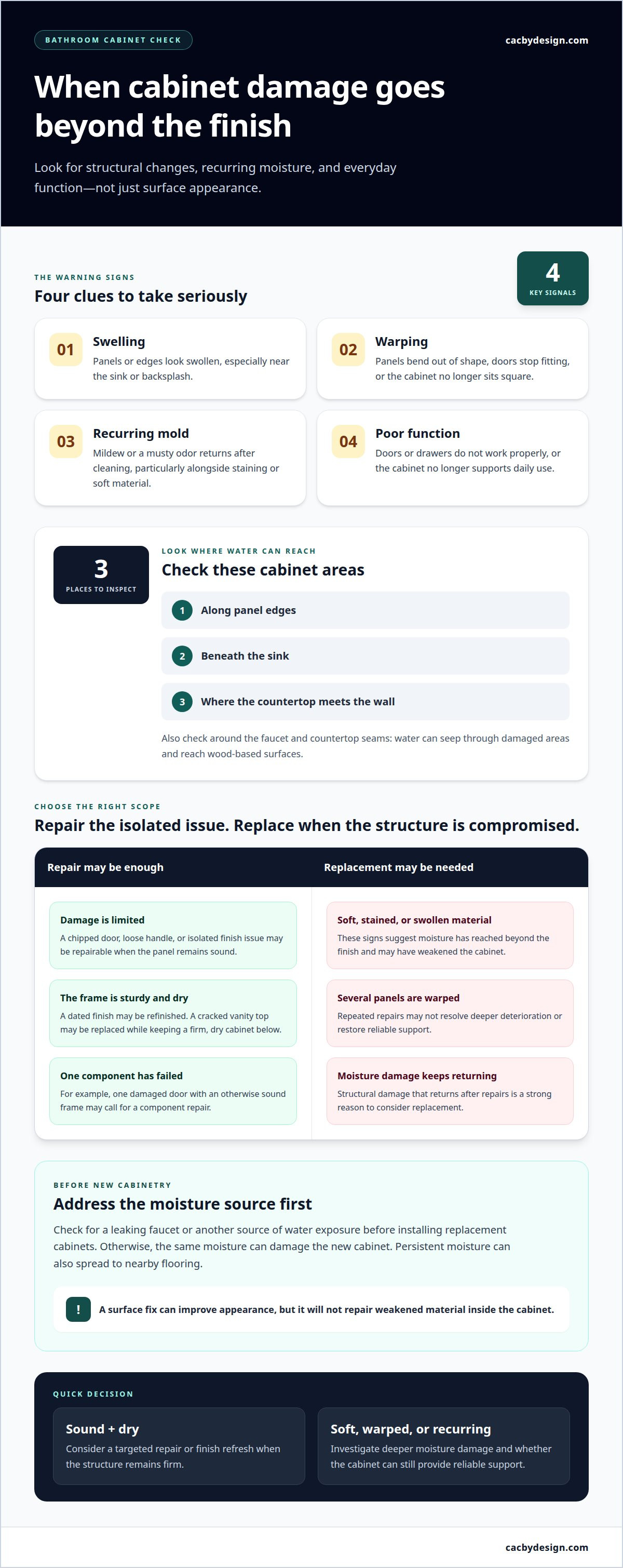
Cracks, chips, peeling paint, and warped panels are more than cosmetic flaws when they appear around a sink or backsplash. Water can seep through a damaged countertop seam or around a faucet, swelling wood-based cabinet surfaces and making laminate bubble. Look for changes along panel edges, beneath the sink, and where the countertop meets the wall. These are signs you need new bathroom cabinets when moisture has reached beyond the finish.
Check whether the damage is limited to a removable component or has spread into the cabinet structure. A chipped door or loose handle may be repairable, while soft, stained, or swollen material points to deeper deterioration. If a vanity top is cracked but the cabinet below remains firm and dry, replacing the top may be enough. If the cabinet feels soft or has warped out of shape, repair may not restore reliable support.
Mildew or a musty odor deserves attention, especially when it returns after cleaning. Surface mold may be removable, but recurring growth alongside stained or soft wood suggests moisture remains in the material. Identify the likely source, such as a leaking faucet, before installing replacement cabinetry. Otherwise, the same water exposure can damage the new cabinet. Persistent moisture damage can spread to nearby flooring, so delaying repairs may increase the affected area.
Bathroom cabinet replacement does not have one universal permit requirement across the United States. Rules can depend on local requirements and project scope, including whether plumbing or electrical systems are changed. Replacing cabinets alone differs from a broader bathroom alteration, so the work involved matters.
For an efficient decision, separate a surface repair from structural replacement. Repair isolated hardware or a small finish chip when the panel remains sound; replace components when swelling, warping, or recurring moisture damage compromises their fit. Among the signs you need new bathroom cabinets, structural damage that keeps returning after repairs is a strong indicator. Properly addressing the moisture source and damaged area helps keep the bathroom comfortable and prevents a cosmetic fix from hiding a larger problem.
2. Storage capacity and changing household needs
Storage problems show up in daily routines: toiletries crowd the counter, towels have no cabinet shelf, or cleaning supplies sit beside the sink. These patterns suggest the current vanity is not meeting the household’s needs. Note which items lack a home and who uses the bathroom. A family with older children, for example, may need separate drawer space for personal-care products. Persistent clutter can be one of the signs you need new bathroom cabinets, especially when the existing layout leaves no practical place for essentials.
Match the cabinet layout to what you actually store. Deep drawers can hold larger bottles, while adjustable shelves accommodate containers of different heights. Pull-out shelves and cabinet inserts make items at the back easier to reach. If a floating-shelf vanity leaves necessities exposed, replacing it with a vanity that has under-sink storage can create useful space without relying on the countertop.
Custom storage can also address awkward layouts. A narrow bathroom may benefit from vertical shelving, while a shared bathroom may work better with a double-sink vanity and separate storage zones. During a bathroom remodel, plan cabinet depth and drawer placement around doors, walkways, and plumbing. A practical layout should make routine cleaning easier, not create hidden corners that collect clutter. If these changes require a different cabinet configuration, inadequate storage may be among the signs you need new bathroom cabinets.
Project pricing depends on the scope of work, cabinet dimensions, material choices, storage features, and installation needs. A straightforward vanity replacement differs from a layout change that requires additional work. These details shape the project, so a generic estimate may not reflect what your bathroom needs.
A well-made bathroom vanity in a ventilated bathroom can last many years. Its useful life depends on construction, ventilation, daily use, and moisture exposure. Rather than replacing cabinets based on age alone, weigh their condition against your current storage needs. If drawers cannot contain everyday items or the layout no longer suits the household, an upgrade can make the bathroom more efficient. Persistent overflow and unusable cabinet space can eventually make replacement the more practical choice.
3. Choosing moisture-resistant replacement cabinets
Choose replacement cabinets with bathroom moisture in mind, especially around the sink and backsplash. Compare the cabinet’s construction and finish, then consider how ventilation and daily use affect moisture exposure. A cabinet beside a frequently used sink faces different conditions from one in a well-ventilated powder room. The goal is a functional fit for the bathroom’s environment, not simply a new look.
Before replacing a vanity, identify whether the cabinet frame, doors, or only the finish has failed. A sturdy frame with dated paint may be suitable for refinishing. Cracks, swollen panels, or soft material point to a deeper problem. Refinishing can improve appearance, but it will not fix damage inside the cabinet. If moisture has weakened the structure, replacement addresses the underlying failure more directly.
Repair makes sense when damage is isolated. For example, a vanity with one damaged door and an otherwise sound frame may need a component repair rather than full replacement. If several panels are warped or the cabinet no longer sits square, repeated repairs may leave the underlying issue unresolved. Compare the frame, drawers, and doors before choosing between a targeted repair and a new cabinet.
Homeowners preparing to sell can use the same assessment. Repair isolated nicks and scratches when the vanity remains functional; replace affected materials when damage is widespread or visibly detracts from the room. A clean, neutral finish can help buyers picture their own style, while a full bathroom remodel may be unnecessary if the cabinet is sound.
For a bathroom and kitchen remodel, assess each room separately. Bathroom cabinets face moisture near the sink, while storage needs and layouts differ from room to room. Choose a replacement that fits the available space, supports everyday use, and makes the most of useful storage. If the existing cabinet is sturdy and only the finish feels dated, refinishing may be the more focused upgrade. If moisture has compromised its structure, replacement is the practical next step.
4. Outdated vanity styles and inefficient layouts
An outdated vanity can make the entire bathroom feel tired, but appearance is not the only signal. Check whether the cabinet is too high or low for comfortable daily use or blocks movement through the room. For example, a bulky vanity in a small bathroom may take up valuable floor space, while a cramped design may leave toiletries without a home. These layout problems affect daily routines as much as the room’s appearance.
Start by assessing how the vanity works. Note where the doors swing, whether drawers open fully, and which items must stay on the countertop. If the current cabinet crowds the doorway, a smaller design may create more usable space. If it lacks room for toiletries, a larger vanity could help, provided it fits the space. The right update balances storage, clearance, and everyday access.
Style alone does not always justify a full renovation. A sturdy cabinet that clashes with a newer bathroom design may be refreshed with paint or decorative details. Refinishing can change the finish without replacing the whole unit, but it will not fix a poor layout or add storage. If the frame is sound and the size works, an aesthetic update may deliver the change you want.
Replacement makes more sense when the vanity is both outdated and inefficient. A cabinet that feels oversized, lacks practical storage, or sits awkwardly beside the sink can undermine the room’s function. Consider how a new arrangement would support your routine, then match its scale to the bathroom. A well-planned replacement can improve appearance and usability together, rather than trading one problem for another.
Ready to turn a cramped or dated layout into a more functional bathroom? Plan your bathroom layout update around the room’s available space and daily routine.
Countertops and Cabinetry By Design: Cabinet Hardware
Countertops and Cabinetry By Design helps homeowners coordinate bathroom updates with cabinet hardware and countertop options. If your vanity is structurally sound but looks dated, new hardware can refresh its appearance without replacing the entire cabinet. If the countertop is worn or no longer suits the room, marble, quartzite, or quartz countertops can complement a broader update.
When damage affects the cabinet itself, focus on replacement rather than treating a new finish as a structural fix. For a renovation, consider how the cabinet hardware and countertop will work with the vanity’s style and the bathroom’s layout. The right combination can create a cohesive result while addressing the changes your room needs.
Contact Countertops and Cabinetry By Design to discuss your bathroom update.
Make Your Next Bathroom Update Count
Start by defining what your bathroom needs to do better. Think about who uses the space, what should be within reach, and how the vanity should fit the room. This gives your remodeling decisions a clear purpose instead of treating each design choice as a separate fix.
Recognizing signs you need new bathroom cabinets is a starting point, not a design plan. The key decision is whether to refresh a sound cabinet or create a more functional layout around your household’s routines. Countertops and Cabinetry By Design can help you plan cabinetry and coordinated countertop options, including marble, quartzite, and quartz, for your home in Hamilton, Butler, Warren, Montgomery, Green, Clinton, Clermont, or Brown County.
Bring your bathroom goals and preferred style into the conversation. Contact Countertops and Cabinetry By Design to discuss the next step for your space. A well-planned update can make everyday routines feel more considered and the room more cohesive. Move forward with a bathroom that works for you.
Frequently Asked Questions
What are the signs bathroom cabinets need to be replaced?
Bathroom cabinets may need replacement when damage or poor fit consistently disrupts daily use. Check whether doors stay aligned, drawers slide without catching, and handles remain secure after adjustment. If several parts fail together, the problem may involve more than one replaceable fitting. A cabinet that no longer supports normal use is a stronger replacement candidate than one with a single isolated flaw.
How can water damage or mold in bathroom cabinets be identified?
Look for changes concentrated near plumbing connections, the sink basin, or countertop edges. Check inside the cabinet after using the faucet: new dampness or water marks can reveal an active leak. A persistent musty odor or discoloration that returns after cleaning also deserves attention. Distinguishing an ongoing water source from an old surface stain helps determine whether cleaning alone can address the problem.
When can bathroom cabinets be repaired or refinished instead of replaced?
Repair or refinishing may suit a cabinet whose main structure remains firm and square. For example, tightening a loose handle, adjusting a door, or replacing one damaged panel may resolve a localized issue. Refinishing can update a sound cabinet’s appearance, but it will not restore weakened structural parts. Consider replacement when repairs would leave the cabinet unstable or unable to function as intended.



Comments