
Bathroom Contractor in Cincinnati: Quotes and Design Options
A bathroom that feels dated after 7-10 years can make a remodel feel overdue, but the right contractor is about more than a fresh look. To understand how to hire a bathroom contractor in Cincinnati, compare the consultation, design scope, written quote, project timeline, reviews, and service-area fit. Clear details make it easier to judge whether a proposed plan matches your goals.
It’s reasonable to want a clear picture of the design and disruption before work begins. A useful consultation should clarify what you want to change, how you use the room, and which decisions shape the project. The quote should make the proposed work easy to understand, and the timeline should explain the sequence and coordination involved.
This guide explains what to discuss during a consultation, how to assess design quotes and timelines, and what to look for in contractor reviews. It also covers how local service coverage can affect coordination, giving you a clearer way to compare options and plan a bathroom that fits your home.
Table of Contents
Consultations, design, and quotes
A focused consultation turns your bathroom goals into a defined project scope. In Cincinnati and nearby communities, compare proposals by what each includes, not just by the bottom line.
Consultation and Price Estimates
Bring room measurements, photos, and a list of priorities to the consultation. Note whether you want to change the layout, update bathroom cabinets, replace finishes, or complete a full bathroom remodel. These details help define the design and scope. The estimate depends on the project, its materials, and site conditions. Review it for included work, material selections, exclusions, and assumptions about existing conditions.
Project Size and Material Costs
A surface refresh and a full bathroom remodel involve different scopes, so their estimates won’t match. Material choices also shape the proposal: tile, cabinetry, fixtures, and countertop selections all affect the planned work. Compare equivalent proposals by checking whether they cover the same room changes and material quality. A clear quote connects each finish to a specific area, such as the vanity top, shower surround, or storage cabinet.
For bathroom remodeling in Cincinnati, licensing requirements depend on the work and the applicable jurisdiction. Distinguish the general contractor’s credentials from trade-specific requirements, and make responsibility for regulated work clear in the written scope.
Permit and inspection requirements also depend on the renovation scope. The project plan should identify which work requires permits, who handles applications, and where required inspections fit in the sequence. Record these responsibilities alongside the estimate instead of leaving them as informal assumptions.
Before approving a design, review the layout, storage, surfaces, and fixture locations together. Changing a vanity, for example, can affect cabinet dimensions, countertop selection, and sink placement. Ask the contractor to show how each selected material fits the plan and which decisions remain open. This gives you a practical basis for comparing design options and confirming the scope before work starts.
Project duration and installation process
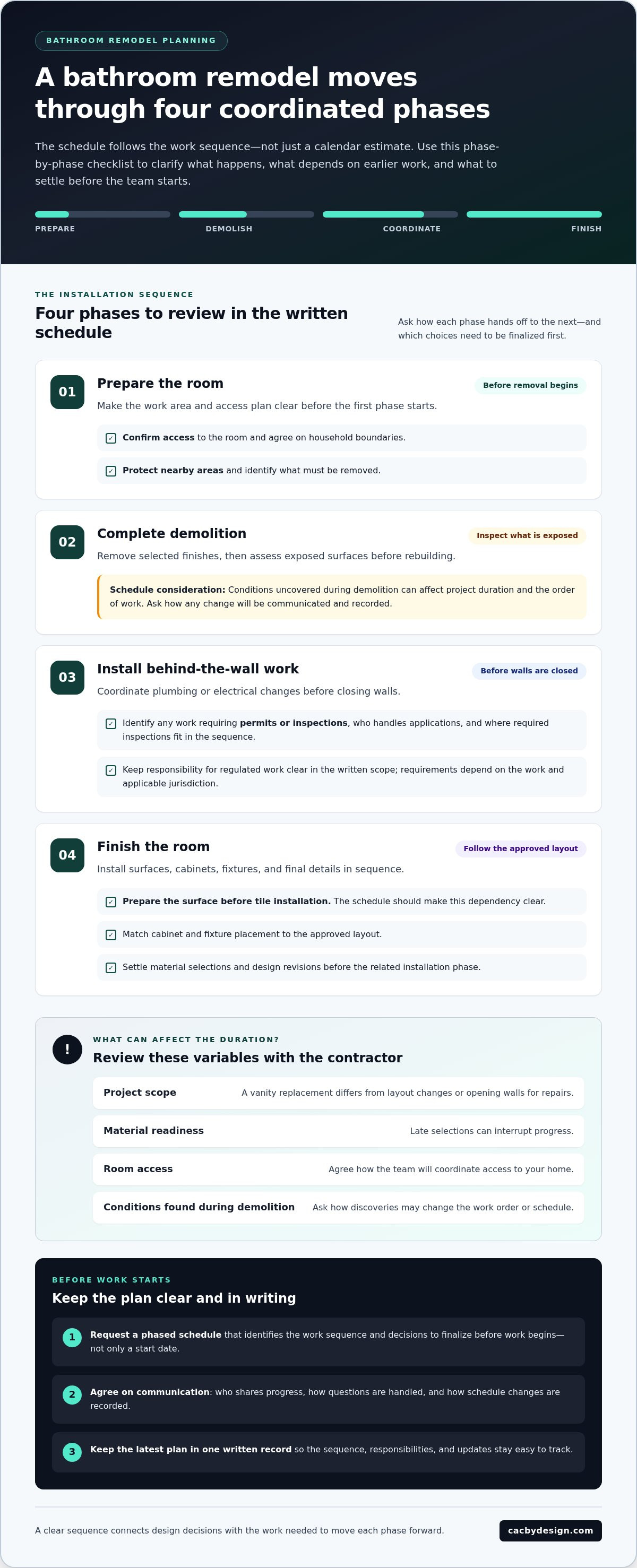
A bathroom schedule follows the work sequence, not just a calendar estimate. Demolition, repairs, plumbing changes, surface installation, and finishing each affect the handoff to the next trade. Ask for a written schedule that identifies these phases and shows which decisions must be finalized before work begins. A phased plan is more useful than a start date alone.
Project duration depends on the scope, material readiness, room access, and conditions uncovered during demolition. Replacing a vanity differs from changing the layout or opening walls for repairs. A clear schedule explains how those variables affect the order of work and how the team will communicate changes and coordinate access to your home.
Prepare the room: Confirm access, protect nearby areas, and identify what must be removed.
Complete demolition: Remove selected finishes and assess exposed surfaces before rebuilding.
Install behind-the-wall work: Coordinate plumbing or electrical changes before closing walls.
Finish the room: Install surfaces, cabinets, fixtures, and final details in sequence.
Use the schedule to clarify dependencies. Tile installation, for example, must follow the work that prepares its surface. Cabinet and fixture placement also need to match the approved layout. Ask which choices could interrupt progress, such as late material selections or design revisions, and settle them before the related installation phase begins.
Before work starts, agree on the daily access plan, household boundaries, and a communication method for updates. Identify who shares progress, how questions are handled, and where schedule changes are recorded. Keep the latest plan in one written record. A focused bathroom remodeling plan can connect design choices with installation steps, helping you understand what needs to happen before each phase moves forward.
Contractor trustworthiness and verified reviews
Assess trust through written details, consistent communication, and reviews describing completed bathroom work. Look for specific examples, such as clear installation updates or careful handling of a design change. A broad compliment offers less insight than a review explaining what happened, how the contractor responded, and whether the finished work matched the agreed scope.
Read individual reviews rather than relying only on an overall rating. Compare comments about scheduling, workmanship, cleanup, and communication. Check whether a review identifies the project type and describes actual outcomes. A detailed account of a vanity replacement, for instance, may tell you little about a full remodel involving layout changes.
Look for patterns across reviews. Repeated reports of missed updates or unclear expectations deserve attention, while recurring praise for specific communication habits is a useful signal. Reviews are one input, not a substitute for a written scope and direct project discussions. Note recurring themes and compare them with the contractor’s proposed process.
A bathroom remodeling contract in Ohio should clearly record the agreed scope, selected materials, payment terms, schedule, and responsibilities for permits and inspections. It should also explain how changes are documented and approved, so a revised material choice or added task doesn’t create confusion later.
Before signing, compare the contract with the estimate and design selections. Confirm that named materials, work areas, and exclusions align across the documents. If the estimate describes a new vanity but the contract only says “bathroom work,” ask for precise wording before approval. Clear documents make the agreed plan easier to track.
Review fit: Compare comments about work similar to your planned remodel.
Review consistency: Note repeated feedback about communication and follow-through.
Review scope: Match contract language to the estimate and selected materials.
Use these checks together. A consistent pattern in reviews, responsive project communication, and a detailed contract provide a practical basis for assessing trustworthiness before work begins.
Find and compare bathroom contractors in Cincinnati
Deciding how to hire a bathroom contractor in Cincinnati starts with a shortlist of contractors whose work fits your project scope. A vanity update and a full bathroom remodel require different planning and coordination. Describe your intended changes consistently, such as replacing cabinets while keeping the existing layout. This makes proposals easier to compare.
Use the same criteria in each conversation. Record whether the proposed work fits your priorities, how the design process works, and which decisions are yours to make. Note how clearly each contractor explains scope, materials, scheduling, and communication. A portfolio can show style, but it doesn’t replace a proposal explaining how your bathroom project will be managed.
Project fit: Does the proposed scope address the changes you want?
Design clarity: Are the layout and material choices explained clearly?
Process: Are responsibilities and project updates described?
Coverage: Does the contractor serve your Cincinnati-area address?
Compare proposals line by line. If one describes cabinet replacement and another includes broader room changes, they aren’t equivalent. Identify differences in materials, demolition, finishing work, and permit responsibilities. Ask for unclear wording to be made specific. This keeps the comparison focused on scope and execution.
Service coverage matters because project coordination depends on serving your address and organizing site visits. When discussing your project, include your neighborhood or municipality, then consider how access, parking, and household routines affect planning. Explain where materials can enter the home and which entrance the crew should use. These details make planning more specific for homes across Hamilton, Butler, Warren, Montgomery, Greene, Clinton, Clermont, and Brown counties.
A practical approach to how to hire a bathroom contractor in Cincinnati weighs project fit, scope, communication, and local coverage together. A contractor whose process aligns with your bathroom goals may be a better match than one whose proposal simply looks more detailed. For a full bathroom remodel, prioritize a plan that connects design choices to the work sequence and clearly assigns responsibilities.
Countertops and Cabinetry By Design: Marble Countertops
Countertops and Cabinetry By Design can bring bathroom design choices together with countertop selection and installation. If your remodel includes a vanity surface, consider marble, quartzite, quartz, or granite and how each will work with your cabinets, sink, and overall design. The team provides design, material selection, fabrication, and installation as part of the remodeling process. This is a practical next step if you’re planning a bathroom remodel and want the vanity surface included in the wider design. Contact Countertops and Cabinetry By Design to discuss countertop options for your bathroom project.
Move Your Bathroom Plan Forward
The next step is to turn your preferred design into a defined project plan. Decide which choices matter most, from the vanity surface to the overall material palette. Use those priorities to guide the conversation and keep the design aligned with the work scope.
If you’re deciding how to hire a bathroom contractor in Cincinnati, look for a process that connects your goals with clear design decisions. Countertops and Cabinetry By Design handles bathroom remodeling, including countertop fabrication and installation. Marble, quartzite, and quartz countertops are among the material options to consider as part of the room’s overall look.
Bring your ideas for the space and the changes you want to make. Contact Countertops and Cabinetry By Design to discuss your bathroom project and explore a path that fits your design goals. A well-defined plan puts your next decision within reach.
Frequently Asked Questions
How can I verify a Cincinnati bathroom contractor’s license, insurance, and references?
Request the contractor’s license details, insurance documentation, and references for comparable bathroom projects. Verify credentials with the issuing authority for the relevant jurisdiction, and review the insurance document for the named business and current coverage dates. Ask references about a similar project, such as a vanity replacement or full renovation, then compare their accounts with the proposed scope and communication plan.
What is the average cost of a bathroom remodel in Cincinnati?
A bathroom remodel estimate depends on the project, including its scope, material selections, layout changes, and existing site conditions. Replacing a vanity, for example, differs from changing the room layout and updating multiple surfaces. Compare proposals with matching work descriptions and materials rather than relying on a broad average that may not reflect your Cincinnati-area home.
What questions should I ask bathroom contractors before hiring them?
Ask how the proposed scope will address your priorities, which decisions you’ll make before installation, and how changes are documented. Clarify who coordinates any permit or inspection responsibilities relevant to the work. Discuss how you’ll receive updates and who handles questions during installation. If your Cincinnati-area home has limited bathroom access, explain household routines early so the work plan can account for them.
How long does a bathroom remodel typically take in Cincinnati?
Timing depends on the renovation scope, material readiness, room access, and conditions discovered during the work. A project that changes the layout involves different tasks from a focused vanity update. Ask for a schedule tied to work phases and note which design choices must be finalized before installation. If demolition reveals a need for repairs, the revised task sequence can affect the expected completion date.
What are common warning signs of bathroom remodeling contractor scams?
Watch for pressure to decide immediately, vague written terms, inconsistent business details, or payment requests that don’t match documented project milestones. A proposal that omits materials, work areas, or change procedures also makes accountability harder. Before agreeing, compare the contract with the estimate and keep signed documents and payment records together. Clear paperwork helps distinguish a defined project from unsupported promises.



Comments