
What to Expect During a Bathroom Renovation: A 2026 Execution Guide
Updated: Jul 23
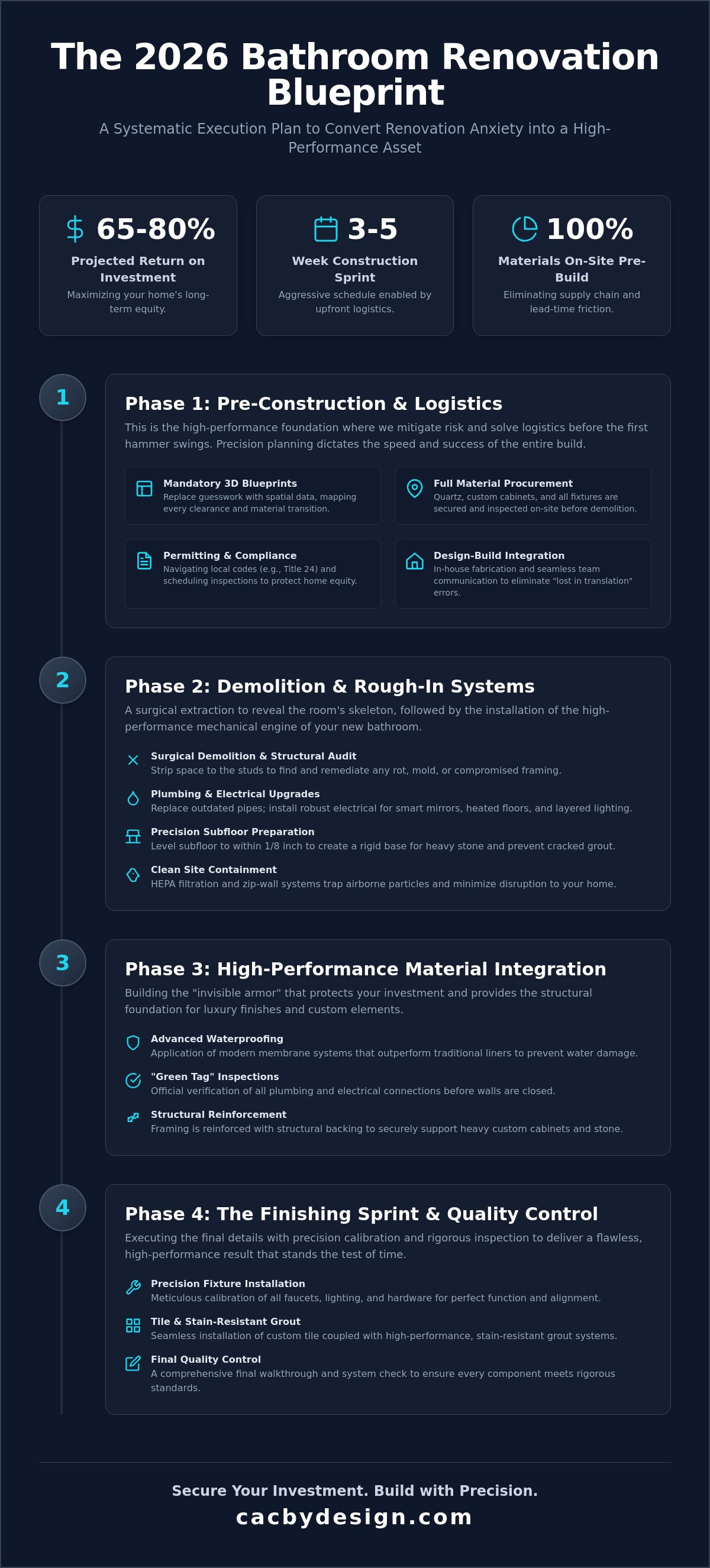
A bathroom renovation isn't a project. It's a high-stakes asset optimization. Most homeowners fear the "forever renovation" or hidden plumbing disasters that kill momentum. Understanding exactly what to expect during a bathroom renovation is the only way to convert that anxiety into a predictable, high-performance outcome. You don't need a vague estimate. You need a systematic execution plan. One that respects your time and maximizes your equity.
In 2026, speed and clarity are the primary levers for success. With custom tile lead times reaching eight weeks and new Title 24 standards now mandatory, guesswork is a liability. This guide delivers a rigorous breakdown of the remodeling timeline. We move from the first demolition strike to the final high-performance finish with total transparency. We'll explore how to navigate logistical friction, manage material delays, and ensure your project hits the projected 65 to 80 percent return on investment. Stop speculating. Start building with precision.
Table of Contents
Phase 1: Pre-Construction and The Logistics of Design
Phase 1 is the high-performance foundation. In 2026, 3D rendering is non-negotiable. It replaces guesswork with spatial data. We map every clearance and material transition before the site opens. This is pure risk mitigation. When evaluating what to expect during a bathroom renovation, realize that the blueprint dictates the speed of the build. A flawed plan is a stalled site. We don't accept that. We establish a tight 3 to 5 week execution window for the construction phase. This aggressive schedule is only possible because the logistics are solved upfront. The scope defines the sprint.
Supply chains remain volatile. We secure quartz countertops and custom cabinetry long before demolition. The process of improving broken, damaged, or outdated structures fails when parts are missing. Our warehouse protocol is strict. We don't start until 100 percent of materials are on-site. We perform a "Dry Run" to inspect every valve and fixture. If a component is defective, we swap it now. We don't wait for the plumber to find it on day ten. We verify measurements to the millimeter. Precision is the only way to prevent mid-project delays that kill momentum.
The Design-Build Advantage
The design-build model eliminates the gap between the architect and the craftsman. By utilizing in-house fabrication, we reduce lead times for custom surfaces. This vertical integration ensures that the person designing the vanity is in direct contact with the person installing it. It removes the "lost in translation" errors that plague traditional general contracting models. We control the supply chain to ensure the installation phase is frictionless.
Permitting and Local Compliance
Navigating Cincinnati and Hamilton County building codes is a technical hurdle. In 2026, compliance with updated ventilation and energy standards is mandatory. Professional contractors handle the paperwork because a lack of permits destroys home equity. We schedule the first round of inspections before demolition begins. This ensures the site is cleared for high-velocity work. Understanding what to expect during a bathroom renovation means knowing that legal compliance is as critical as the aesthetic finish. We secure the equity of your home through rigorous documentation.
Phase 2: Demolition and Rough-In Systems
Demolition is the loudest, most disruptive reality of what to expect during a bathroom renovation. It isn't a chaotic wrecking ball event. It's a surgical extraction. We strip the space to the studs to reveal the skeleton of the room. This is the only way to audit the structural integrity of your home. If we find rot, mold, or outdated framing, we remediate it immediately. We don't build high-performance bathrooms on compromised foundations. This phase is about stripping away the past to make room for a precision-engineered future.
The rough-in mechanics represent the technical engine of the project. We replace 1950s-era galvanized pipes with modern, high-performance systems. This isn't just about water flow. It's about leak prevention and long-term reliability. Electrical distribution is equally aggressive. We plan for smart mirrors, heated flooring, and layered lighting zones. Your bathroom needs the power to support modern tech without tripping breakers. We also focus on subfloor preparation. Heavy stone and custom vanities require a rigid base. We level the subfloor to within an eighth of an inch. A sagging floor leads to cracked grout. We eliminate that risk before the first tile arrives. To ensure the final installation matches this level of precision, check out ALI Construction for expert flooring and tile services.
Managing the Construction Environment
We treat your home like a clean room. We use HEPA filtration and zip-wall containment to trap airborne particles. Noise is a factor. Expect heavy vibration and temporary utility shut-offs. We coordinate these windows to minimize friction with your daily routine. Site logistics include daily debris removal and disposal. A clean site is a safe site. It ensures the crew moves with maximum efficiency and zero wasted motion.
The Invisible Performance Layer
Waterproofing is the most critical technical tool in our arsenal. We use advanced membrane systems that outperform traditional plastic liners. This is the invisible layer that protects your equity from water damage. We invite city inspectors during this phase to verify every connection. We want the "green tag" before we close the walls. We also reinforce the framing to support heavy custom cabinets in West Chester, OH. Heavy storage requires structural backing. If you're ready to upgrade your infrastructure, consult with a specialist who understands the mechanics of a high-performance build.
Phase 3: High-Performance Material Integration
The "Close-In" starts the transition from raw infrastructure to high-performance utility. After the rough-in systems pass inspection, we seal the envelope. We install moisture-resistant backing, typically cement board or advanced membrane systems, to create a waterproof barrier. This is a critical pivot point in what to expect during a bathroom renovation. We don't just hang drywall. We prep for zero-tolerance surface alignment. If the backing isn't perfectly plumb, the tile won't be either. We calibrate the walls to ensure that large-format tile and stone slabs sit flush with the subfloor. Precision at this stage prevents aesthetic failure later.
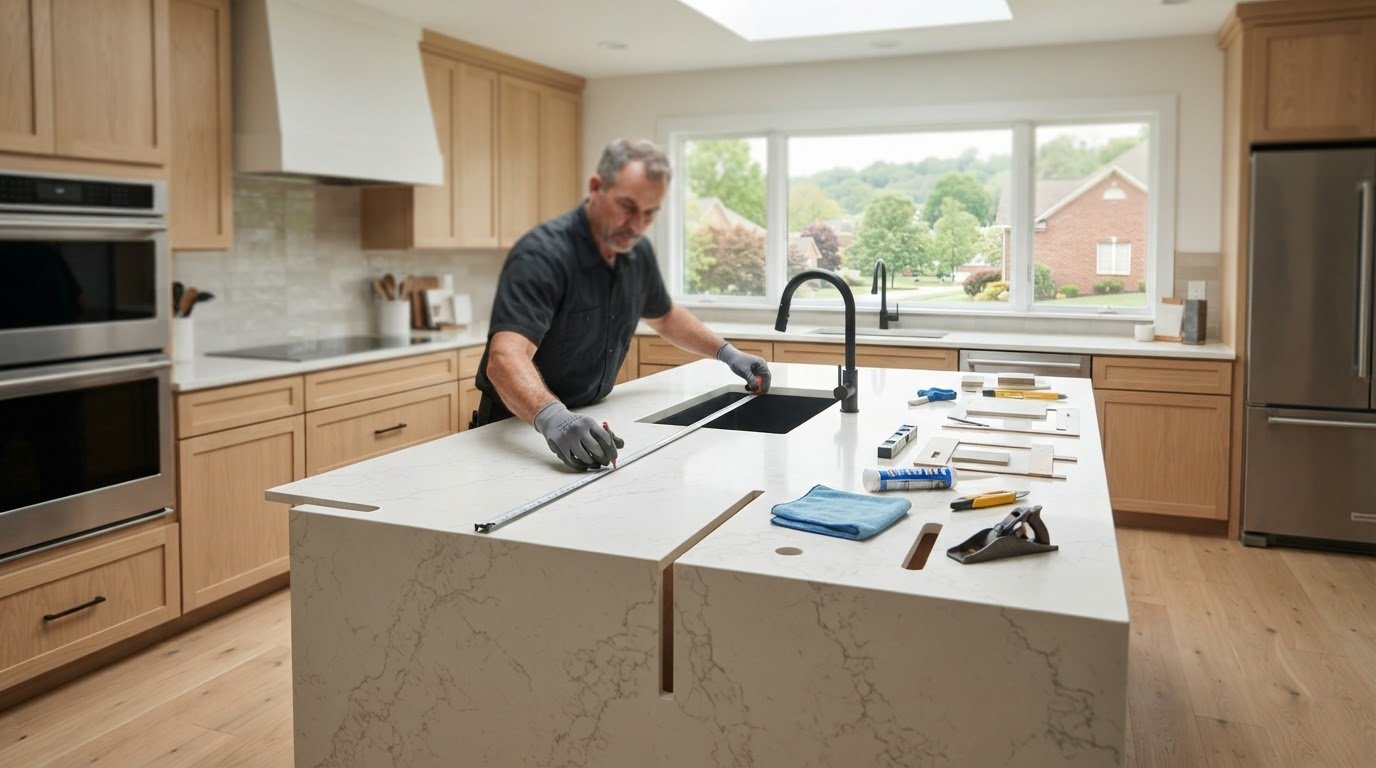
Cabinetry and stone fabrication happen in parallel. We mount custom bathroom cabinets using the structural blocking installed during the rough-in. This ensures the vanity can support the massive weight of quartz or quartzite countertops. In tight Cincinnati layouts, every millimeter counts. We fabricate our slabs with CNC precision to ensure a seamless fit against existing walls. Tiling follows a strict logic. We move from the floor to the walls using leveled laser lines. We don't tolerate lippage or uneven grout lines. It's a technical execution, not an artistic suggestion. Every joint must be exact.
Selecting the Surface Engine
Resale value in the Ohio market depends on durability. Quartz is the current high-performance leader because it's non-porous and resists staining. Granite offers heat resistance but requires periodic sealing. We manage slab selection at our Cincinnati stoneworks facility. This gives us total quality control over vein matching and edge profiles. We integrate under-mount sinks with a waterproof seal. This creates a clean, minimalist profile. It eliminates the grime-collecting lip of traditional drop-in models. It's a cleaner look with better performance.
Cabinetry as a Functional Lever
Modern storage is about more than drawers. We maximize vertical space to solve the footprint constraints of older Cincinnati homes. We integrate internal power outlets directly into the cabinetry. This keeps hair dryers and electric toothbrushes off the counter. It's about clutter-free performance. Our cabinets feature soft-close hardware and moisture-sealed finishes. These are engineered for 20-year performance in high-humidity environments. When you understand what to expect during a bathroom renovation, you realize that every cabinet is a strategic tool for home equity. Function drives value.
Phase 4: The Finishing Sprint and Quality Control
Phase 4 is the high-velocity sprint. This is where the technical vision becomes a functional reality. You've survived the dust of demolition and the complexity of the rough-in. Now, we focus on the final 5 percent. This is often where standard contractors lose focus. We accelerate. When considering what to expect during a bathroom renovation, understand that the final week is a rigorous calibration phase. It isn't just about hanging mirrors or attaching trim. It's about ensuring every mechanical and aesthetic component operates at peak performance. Precision is mandatory. We don't accept anything less than a high-performance finish.
Fixture calibration is a technical requirement. We install faucets, showerheads, and valves with millimeter precision. We don't just check for leaks; we verify ergonomic alignment and spray pattern accuracy. Grout and sealants follow. We use high-performance, stain-resistant grout systems. These aren't the porous mixtures of the past. They are engineered to resist mold and discoloration for decades. The hardware and trim layer defines the project's modern identity. We install cabinet pulls, towel bars, and robe hooks with laser-leveled accuracy. Every detail serves the overall aesthetic and functional goal.
The Final Mechanical Connections
We test every system under a full load. We run the shower and the sink simultaneously to verify water pressure and drainage speed. We calibrate smart home integrations and heated floor thermostats. Your technology must be intuitive and responsive from day one. The final electrical trim-out includes switches, dimmers, and integrated vanity lighting. We ensure the color temperature of your LEDs is consistent across all zones. This prevents the visual friction of mismatched lighting. We want total atmospheric control.
Detailing and Final Polish
The project ends with a deep clean. We remove all construction residue to leave the space in a move-in ready state. We apply protective sealants to natural stone surfaces to lock in their aesthetic value and prevent staining. Finally, we conduct a systematic walkthrough. This is the "Punch List" phase. We identify and rectify any 1% imperfections. A slight gap in a miter joint or a minor paint touch-up gets handled now. We don't wait for you to find it. We find it first. Every detail must meet Countertops and Cabinetry By Design standards. If you're ready for a renovation executed with this level of precision, schedule your project consultation today.
The Result: Engineering Equity and Long-Term Performance
The construction phase has concluded. The dust has been neutralized. Your high-performance asset is now live. A strategic renovation is more than a room upgrade; it's a financial engine. In 2026, mid-range bathroom remodels are projected to deliver a 65 to 80 percent return on investment. This isn't a speculative figure. It's the result of rigorous planning and material selection. Understanding what to expect during a bathroom renovation means shifting your focus from the mess of demolition to the clarity of long-term performance. You've transitioned from a construction site to a high-yield home asset.
Maintenance is the secondary lever for equity. To preserve high-performance surfaces for decades, you need a technical protocol. Quartz and granite countertops are durable, but they aren't invincible. Use pH-neutral cleaners. Avoid abrasive pads that compromise the surface seal. Your moisture-sealed cabinetry is engineered for high-humidity environments, but consistent ventilation remains critical. Modern mechanical exhaust systems should run for 20 minutes post-shower to protect the integrity of the finishes. This isn't just cleaning. It's asset management. You're protecting the 20-year lifespan of your investment.
Analyzing the Value Add
Modern bathroom systems significantly influence appraisal values in Butler and Warren Counties. Appraisers in 2026 prioritize "invisible" upgrades like smart ventilation and high-efficiency drainage. The psychological impact is equally measurable. A high-performance morning routine, powered by integrated lighting and heated flooring, reduces daily friction. Design-build projects sell faster than DIY refreshes because the technical cohesion is visible. Buyers recognize the difference between a cosmetic patch and a precision-engineered suite. They pay a premium for the confidence of a professional build.
Your Cincinnati Design Partner
We don't disappear when the final grout line is sealed. As a local, family-owned partner, we provide the confidence of long-term support. You can leverage our in-house craftsmen for future projects, ensuring a consistent aesthetic and technical standard across your entire home. Local support is the backbone of successful home renovation contractors in Cincinnati. We live in the same neighborhoods we build in. We're committed to the long-term performance of your home's equity. Ready to engineer your equity? Schedule your design consultation and let's start the blueprint for your 2026 renovation.
Master the Execution. Secure the Equity.
A bathroom remodel is a technical deployment. It's not a cosmetic whim. By mastering what to expect during a bathroom renovation, you move from anxiety to aggressive equity growth. We've mapped the progression from the first 3D blueprint to the final mechanical calibration. You now understand the mechanics of the "Close-In" and the importance of a zero-tolerance punch list. This systematic approach ensures your project hits the projected 65 to 80 percent ROI without the friction of traditional contracting models. Precision is the only path to a high-performance result.
Don't leave your home's performance to chance. Leverage over 20 years of local expertise. Our in-house fabrication and installation teams control every variable. We specialize in high-performance quartz and custom cabinetry designed to survive the modern environment. We've been a Cincinnati fixture since 2004. We don't just build bathrooms; we engineer long-term assets. It's time to stop speculating and start executing with total clarity.
Engineering your home equity starts here. Schedule your Cincinnati bath consultation today.
Frequently Asked Questions
How long does a full bathroom renovation actually take?
A full renovation typically spans 8 to 16 weeks depending on structural complexity and permit approvals. Cosmetic refreshes move faster, often concluding within 2 to 4 weeks. High-performance projects require this window to account for 2026 material lead times and rigorous inspection schedules. Rushing the execution phase compromises the technical integrity of the waterproofing and finish quality.
Can I stay in my home during a bathroom remodel?
You can remain in your residence, but you must prepare for significant operational disruption. Noise, vibration, and temporary utility shut-offs are standard during the rough-in phase. If the project involves your primary or only bathroom, you'll need a secondary facility for the duration. We utilize HEPA filtration and zip-wall containment to isolate the construction zone from your living space.
What is the most expensive part of a bathroom renovation?
Labor and technical tile installation represent the largest budget allocations in 2026. Skilled trades like plumbers and tile setters account for 35 to 50 percent of total project costs. High-performance materials like quartz countertops and custom cabinetry follow closely. Investing in these durable elements is a strategic move to maximize your home's long-term resale value and equity.
Do I need a permit for a bathroom remodel in Cincinnati?
Permits are mandatory for any project that alters structural, electrical, or plumbing systems. Navigating Hamilton County and Cincinnati building codes is a technical requirement that ensures your renovation meets 2026 safety standards. Professional contractors manage this paperwork to protect your property's legal standing. Skipping this step is a high-risk error that can derail future home appraisals or sales.
What is the difference between a refresh and a full renovation?
A refresh focuses on cosmetic updates like paint, hardware swaps, or vanity replacements without altering the room's footprint. A full renovation involves stripping the space to the studs to update the rough-in mechanics and infrastructure. Knowing what to expect during a bathroom renovation helps you identify if you need a deep structural overhaul or a surface-level aesthetic update.
How much mess should I expect during demolition?
Expect substantial dust and debris during the initial surgical extraction of the old room. Demolition is a high-impact phase that requires stripping walls and subfloors to audit the home's skeleton. We use advanced dust mitigation protocols and daily site cleaning to minimize the spread of particles. A clean construction environment is essential for maintaining project momentum and crew safety.
Should I replace my tub with a walk-in shower?
Replacing a tub with a walk-in shower is a dominant 2026 design trend that improves spatial efficiency. Many homeowners opt for large, open-concept showers with dual heads and built-in seating to create a spa-like environment. This transition often increases daily functionality and modern appeal. However, maintaining at least one bathtub in the home is a smart strategy for preserving resale value to families.
How do I choose between quartz and granite for my vanity?
Choose quartz if you want a non-porous, high-performance surface that requires zero sealing and resists staining. Quartz is the preferred choice for modern, low-maintenance bathrooms. Granite offers unique natural aesthetics and superior heat resistance but requires periodic maintenance to prevent moisture absorption. We facilitate slab selection at our Cincinnati facility to ensure your choice aligns with your long-term performance goals.

Comments